
Kate’s story – “I’m a classic example of a sandwich carer”
Kate reflects on the challenges of being a sandwich carer and shares how her Admiral Nurse has supported her family.
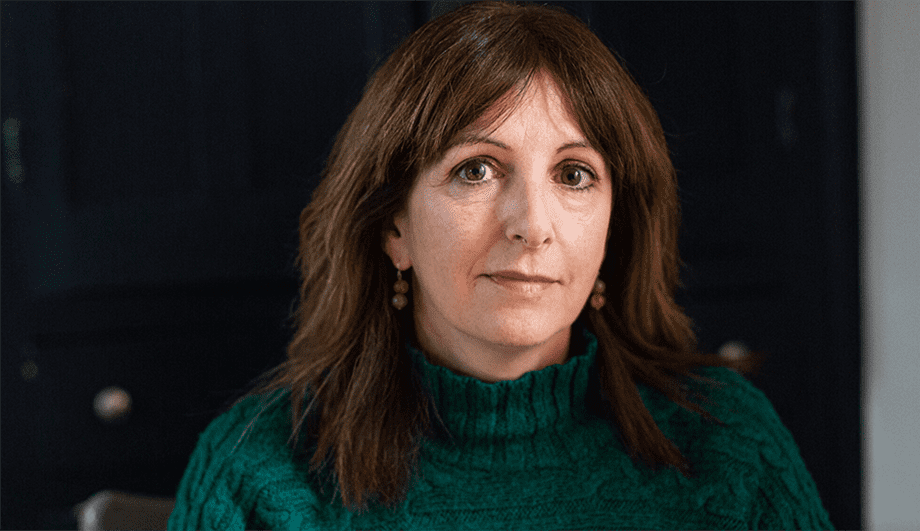
Penny talks about the guilt she has felt surrounding her mum’s move into residential care.
My Mum, Rosemary, was always a happy, chatty, and sociable person. She was a talented Scottish musician who moved to England with her family to train at the Royal Academy of Music. She played piano, oboe, viola and sang. Mum was a big part of the community where she lived for over 50 years – she helped organise the local music festival and was the Musical Director for many local productions.

Penny and her mum, Rosemary
I first noticed that something wasn’t right when Mum started struggling to process information. She repeated things a lot and couldn’t manage her diary. This went on for five years before Mum was diagnosed with mixed dementia in 2016.
When Mum was diagnosed, one of the first things we did was visit a care home. I’m not sure what prompted this, maybe that it would be good for us to see one together while she was still well. Deep down I think we both knew going into full time care eventually was a possibility. Perhaps I was also looking for her blessing? We did both agree we hoped it would not be needed and she made it clear then that her preference was to stay at home. That then became my goal. To keep her at home for as long as I could.
As her dementia progressed, Mum started asking where everyone was, emptying cupboards looking for food, and getting upset and confused. It always happened late afternoon or evening.
I called the Admiral Nurse Dementia Helpline for some advice, and the specialist dementia nurse explained that Mum was experiencing ‘sundowning’ – a state of intense confusion and anxiety that typically happens around dusk. She was reverting back to old routines and habits around family mealtimes to help make sense of things. The advice the nurse gave me meant we were able to anticipate Mum’s sundowning and try to occupy mum her other things before she got caught up in it.
However, the sundowning episodes got worse and Mum began walking out of the house on her own into the street, confused, and asking for help. Although she had lots of carers, this happened in between visits and we realised she was not safe at home on her own.
I was devastated when I realised a care home was the only option we had left. I tried so hard to keep Mum at home but even with 24-hour care, things were not working. I was tearful and heartbroken. Everyone around me, from healthcare professionals to close family, told me a care home was the only way forward, but it was still so hard to accept. I did not want to be the one to call time. It felt like a huge decision to take on someone else’s behalf.
Again, I phoned the Helpline – it was so helpful to speak to an Admiral Nurse who reassured me that it was the right thing to do and helped me to plan.
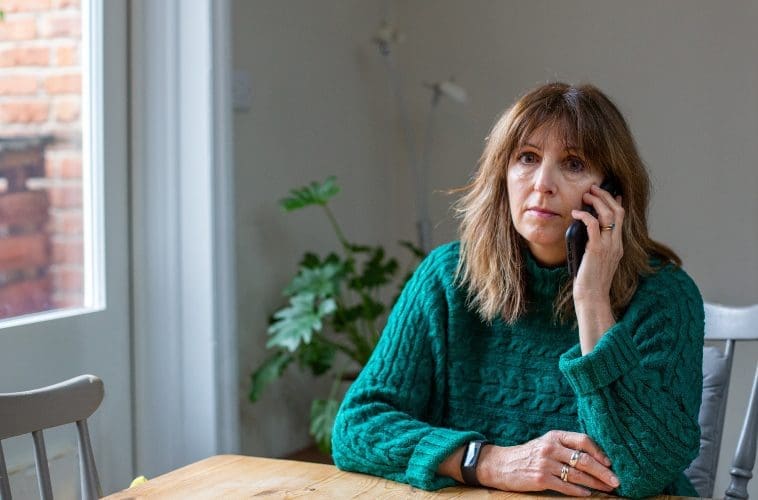
Penny on the phone to an Admiral Nurse
Despite trying to explain to Mum that she was moving to a care home, she did not remember on the long journey there. She thought we were on a lovely day out, a drive in the country. That made it all so much worse. I was overwhelmed with sadness and guilt. She was horrified when we got there and initially did not settle well at all. That just compounded everything I was feeling.
Even though I have now found the right care home for her, the feelings of guilt don’t go away. I feel it is my fault that she is not at home with her things, even though logically I can see that would be impossible now. I visit her every week, but I worry all the time about whether I’m seeing her enough. She does not recognise me as her daughter, but she knows I’m someone she cares about. I am fearful that if I don’t go as much, she will forget me altogether. If I ever have to miss a week, I feel terrible about it.
I try to consider what I would say to someone else in the same situation as me. I would reassure them Mum is in the right place, that her needs are being met and that I didn’t have the right skills to keep her safe at home anymore. Seeing that she is content and settled in the care home helps hugely and gives me some peace. More than anything, I hope Mum would think that I’d done the right thing.
Life doesn’t have to stop after a dementia diagnosis, and I can still spend time with Mum doing things we both enjoy. Mum also still loves music, and she still remembers how to play the piano. She continued to teach piano after the diagnosis, and prior to the pandemic, she sang in two choirs and played piano in a care home. Music is so important to her, and it keeps her mind active.
I started the Discovering Dementia podcast with Mum when I realised that people are often isolated after getting a dementia diagnosis. Mum and I hoped the podcast would help other families in a similar situation to feel less alone. Mum was also very keen to reduce the stigma around dementia. Dementia can progress very gradually – she didn’t change overnight. She wanted people to know that she was still the same person after the diagnosis.

Penny and her mum, Rosemary recording their podcast together
I am now a Dementia UK volunteer ambassador and local community events to talk to people about the charity. I’ve realised how little people know about Dementia UK and the support available to them. That’s why talking about dementia and raising awareness is so important.
When you are trying to find a care home, go with your gut. Look at as many as you can and don’t stop until you find the right one. I was worried that I was being too picky, but I knew what I wanted, and I wasn’t prepared to settle. I’ve now found a home that suits Mum perfectly and I’m so pleased I didn’t give up.

Hilda Hayo, Dementia UK’s Chief Admiral Nurse and Chief Executive Officer, reflects on Penny’s experience."Penny highlights the guilt that is felt by a family when they must make the very difficult decision to place a parent or partner into long term care. The decision can be made even more difficult when promises have been made never to do this or when family members disagree that this is best for their family member."
“Penny highlights the guilt that is felt by a family when they must make the very difficult decision to place a parent or partner into long term care. The decision can be made even more difficult when promises have been made never to do this or when family members disagree that this is best for their family member.
“In my experience it is very difficult for family to identify the “right time”, which makes the decision even more complex. Families do not make the decision about long term care without having tried many other ways to support their loved one safely in their own home. There comes a point when even with the most inclusive care package they cannot meet the person’s needs, which could leave the person with dementia at risk. In my experience the family carer often risks their own health and wellbeing before they decide that long term care is necessary.
“The advice and support of a specialist dementia nurse (Admiral Nurse) can be very helpful in talking through these issues and feelings of guilt that can occur due to the decision that is made. Also highlighting to the family that just because someone goes into a long-term facility it doesn’t mean you don’t care. In fact many people say that it increases the quality time they can spend with their family member so the quality of life for both is improved.”
Kate reflects on the challenges of being a sandwich carer and shares how her Admiral Nurse has supported her family.

Mike reflects on the importance of the Nationwide Building Society dementia clinics in North Ayrshire, Scotland.

Harjit reflects on the support she received from Admiral Nurse, Tina, whilst her mum was in hospital.