
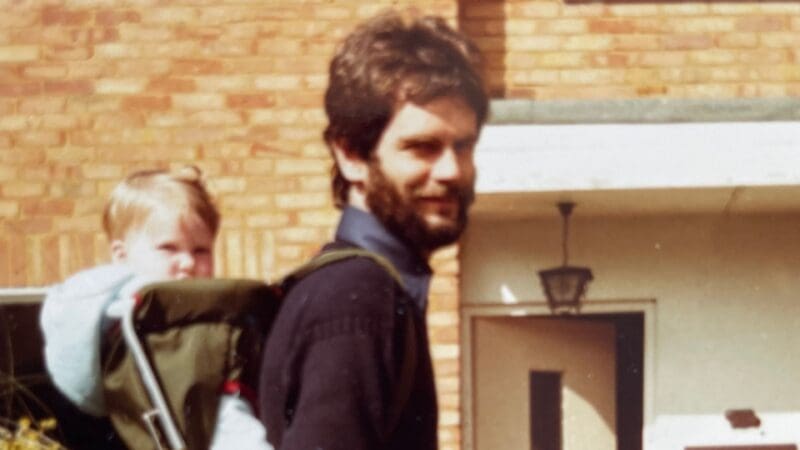
Kate’s story – “I’m a classic example of a sandwich carer”
Kate reflects on the challenges of being a sandwich carer and shares how her Admiral Nurse has supported her family.
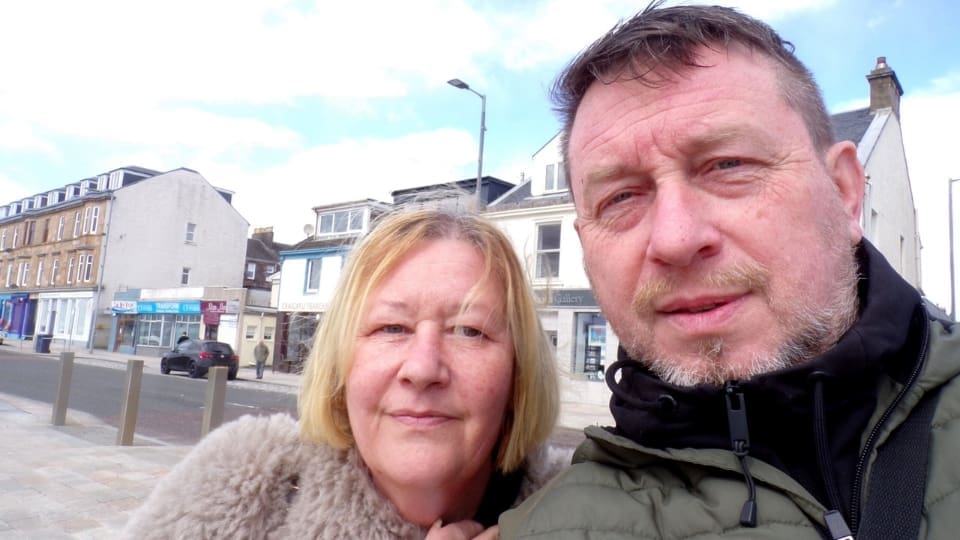
Mike reflects on the importance of the Nationwide Building Society dementia clinics in North Ayrshire, Scotland.
Fiona was always funny, calm, and had a happy–go–lucky attitude. She really enjoyed life. We met online in 2002, which was unusual at the time. I was 38 and Fiona was 34. I was living in London and she was in Paisley, Scotland. We both worked a lot and Fiona was in hospitality, so we were sometimes like passing ships in the night.
We’ve been together for 25 years now. Fiona has two sons and a daughter, and I also have a daughter. I helped raise Fiona’s youngest son from the age of six and he’s 30 years old now.
After 10 years living in Hertfordshire, we moved to Scotland. We wanted to be near Fiona’s grandchildren to see them grow up. We love it here in North Ayrshire.

Mike and Fiona
When I look back now, Fiona started showing signs of dementia two or three years before she was diagnosed. She would get up at 8am to get ready for work when she didn’t start until 3pm. Once, she had a medical appointment for an injection, and she was certain that it was on a particular date. No amount of reasoning would convince her otherwise. I had to drive to the appointment to show her that the building was closed before she would accept it. This was the first lightbulb moment for me.
Fiona was managing a food store and decided to leave that job. She was then off work for a period of time and she didn’t want to apply for other positions. When I did the applications for her and she got an interview, she failed to get through. On their own, these issues didn’t seem much to worry about, but it was Fiona’s lack of desire to change that really worried me. Yet I still never considered that she might have dementia.
I had taken Fiona to see the GP for a different medical issue. She had gone in alone and came out angry. It turned out that while Fiona was with the GP, she had been given a memory test and scored badly. The GP must have been concerned with the way Fiona was answering questions and suggested further tests.
Following a brain scan, Fiona was officially diagnosed with young onset Alzheimer’s disease. It took eight months to get a diagnosis. Fiona was 55 years old.
Until then, we both thought it might not be true. The diagnosis was the moment when grief really struck us. We knew that our lives had changed and would never be what we had planned or expected. During this time, we would have really benefited from someone guiding us through grief.
Fiona rejected the diagnosis, and she wouldn’t talk about it. I came up with the name ‘bad biscuits’ as a code for Alzheimer’s. It was a way of being able to talk about the disease without the associated stigma. Perhaps if we didn’t say the word ‘dementia’, it wouldn’t be true or it would go away. Fiona felt able to use this phrase, and we were able to move forward albeit, slowly.
When we got the diagnosis, we were given some photocopied information, and I thought, “Is this it?” You’re going through grief, doubt, confusion, and you’re expected to go out and find the help and information yourself, rather than the help coming to you. When you have a cancer diagnosis, there is a clear pathway. There is no pathway for dementia.
I compare being a dementia carer to jumping on to a spinning roundabout. You’re desperately trying to find your balance and catch your breath. I had to give up work to care for Fiona full-time two months after her diagnosis, so we had no income. I was dealing with so many emotions whilst also trying to work out what financial benefits we were entitled to. My focus wasn’t on improving our quality of life anymore; we just needed to survive.
I found out about different support services from other carers, but everything seemed so disjointed. A lot of services were quite a long way away, which was not financially viable. There were generic carers’ groups in North Ayrshire, but nothing specifically for dementia carers. When I attended a couple of these groups, I realised that other people were floundering too.
I had gathered lots of information that I wanted to share with other dementia carers, so I complied it all into a dementia support pack. I also set up Dementia Connect Carers Group (North Ayrshire). This gives people living with dementia and their carers a space to meet and offer each other emotional and practical support.

Mike and Fiona
We didn’t find Dementia UK until much later down the road, but the Nationwide Building Society dementia clinics, which are taking place in branches across the UK, are as important as oxygen. The clinics provide appointments with a dementia specialist Admiral Nurse, and offer advice and support with everything related to dementia. Our nearest branch is only 20 minutes away; for once, it feels like help is coming to us, rather than us having to find it.
Meeting with the Admiral Nurse, Steven, felt different from meeting any other professional. All the other services we encountered had been focused on Fiona. But the first thing I noticed about Steven was his focus on me as the carer. This was a defining moment that opened my eyes to what my role is now. I had never really seen myself as a carer until speaking with Steven.
What made the biggest difference for me was being able to talk honestly and openly about how I was feeling. Steven is a great listener and reassured me that how I was feeling was okay. It felt like he was in my corner and understood what I was going through. I felt heard and it helped me to refocus on how I could best look after Fiona.
The clinic is specialist and focused. Steven gave me a great booklet to take away, which was written in a style that really resonated with me. It had quotes from other carers and answered key questions in a way that felt manageable. At this stage, I’m not looking to make massive changes, but this booklet provides lots of small tips that help me take on the next day. Some parts of the booklet become more relevant as you move through the journey.
I’ve found that the mental health and wellbeing field seems to be dominated by women. In this case, it did help to speak to another man and to build that connection. But in truth, it was Steven’s character that made the biggest difference. It felt like speaking to a friend who genuinely cared.
I would recommend the Nationwide clinics to all dementia carers, and I always pass on the details of upcoming clinics to my Dementia Connect group. Dementia services are being cut in North Ayrshire, even though more people are being diagnosed with dementia, so the Nationwide clinics are critical.
If the clinics weren’t there, we wouldn’t get any expert advice. North Ayrshire is very grateful.
Kate reflects on the challenges of being a sandwich carer and shares how her Admiral Nurse has supported her family.
Mike reflects on the importance of the Nationwide Building Society dementia clinics in North Ayrshire, Scotland.

Harjit reflects on the support she received from Admiral Nurse, Tina, whilst her mum was in hospital.