

Welcome to Dementia UK’s Christmas Shop
Making an order through our Christmas Shop will help our specialist dementia nurses be there for even more families.
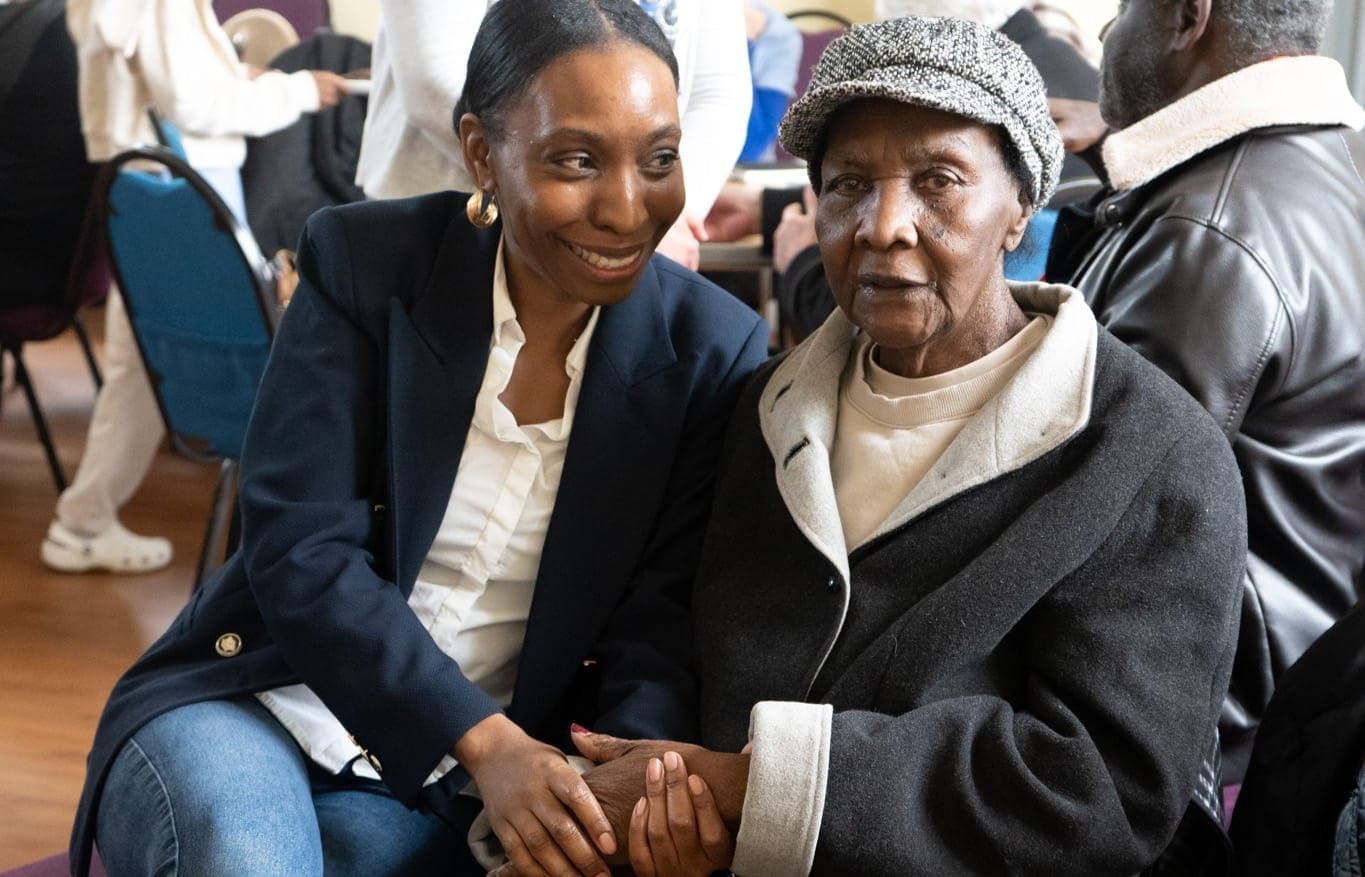
We explain what dementia support groups and cafés are and how they can benefit people affected by dementia.
When someone is diagnosed with dementia, it can trigger a range of emotions. It may lead to feelings of isolation for both the person living with the condition and their family, friends and carers.
We often hear from people affected by dementia who feel there is a lack of support following a dementia diagnosis. This is where dementia support groups and cafés can play an important role in providing a sense of community.
Dementia support groups are organised meet-ups, either in person or online. Some groups may be exclusive to people living with dementia and/or their family, friends and carers, while others are open to all – for example, groups for all carers, not just those who support someone with dementia.
There are various types of groups, such as:
Dementia cafés, sometimes referred to as memory cafés, are a common form of in-person dementia support group. They provide a chance for people affected by dementia to chat and share experiences with other attendees in an informal setting. There may also be organised activities, such as games or a quiz.
Some dementia support groups and cafés have healthcare professionals or volunteers present, who can provide information and advice.
Michaela, who created and runs the Spring Bleau Dementia Café“Our café welcomes people living with dementia, their carers and – importantly – even people who don’t live with dementia. There is music, dancing, bingo and no shortage of food.”
It is important to find a dementia support group or café that is right for the person attending, whether they are living with the condition themselves or are a family member, friend or carer.
Consider the person’s interests and personality and look for a group that offers activities they might enjoy and that suits their age group.
Most dementia groups are intended for older people, which may not feel right for people with young onset dementia. However, there are young onset dementia-specific groups which are tailored to a younger age group.
Julie, who was diagnosed with young onset dementia aged 54, shares, “After my diagnosis, I started going around the dementia cafés in my area, but although friendly, they were organised around the needs and interests of people from my parents’ generation. There was no one my age to relate to, so I decided to establish my own young onset dementia peer support group.”
Going to a dementia support group or café for the first time might be daunting, especially if the person is unsure about attending. But they can provide many benefits for both the person living with dementia and their family, friends and carers.
Dementia support groups and cafés are a great way to meet other people affected by dementia, providing an opportunity to share experiences in a supportive environment and helping to reduce feelings of isolation.
Gail, who was diagnosed with young onset Alzheimer’s disease aged 54, shares, “When I started going to an in-person peer support group, talking to other people living with the condition was wonderful. I didn’t feel so alone.”
Michaela says: “The Spring Bleau Dementia Café is a safe place where people can smile or let the tears flow. I’m so glad my nan got to experience the café in her final months. She relished being around other people.”
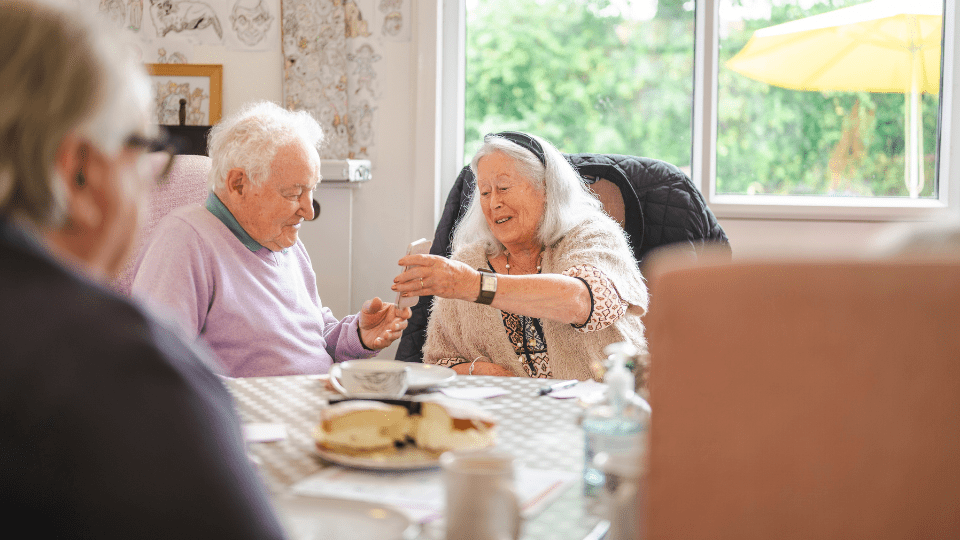
Staying socially active is vital for everyone affected by dementia. Dementia support groups and cafés provide regular opportunities to meet new people and catch up with attendees ─ and the conversations don’t have to be about dementia! It’s also a chance to share experiences, advice and tips with each other.
Mahersh, whose mother had Lewy body dementia, says, “My mother was a regular at dementia cafés. Even in her advanced stage of dementia, she loved these trips out of the house. I could see that she was uplifted in the company of warm and friendly people.”
They also provide an opportunity to build connections with other people affected by the condition. This is especially important for people living alone with dementia.
Julie shares, “For the last six years, I’ve run a ‘Living alone with dementia’ group through an organisation called Dementia Alliance International (DAI). It’s so nice to be among people who understand what each of us is going through. When you have dementia and live alone, groups like this mean the world.”
Caring for a person with dementia can be physically and mentally demanding. Groups that are specific to carers can provide a welcome break from caring and a chance to relax and socialise.
There can be a range of activities at dementia support groups and cafés which are tailored to different stages of dementia or interests, such as word searches, colouring, listening to music, puzzles or dancing.
They can be a great way for attendees to express themselves and stimulate their brain, or if the group has an activity or creative focus, to take part in current hobbies or interests, or discover new ones.
“Painting hasn’t just given me an outlet; it’s given me a purpose. Putting my memories onto a canvas means Alzheimer’s disease can never steal them,” says Sylvia, who’s living with Alzheimer’s disease.
Taking part in a physical activity with others, such as joining a walking group, can help to maintain muscle strength and mobility in a person with dementia, boost their mood and support positive mental health and wellbeing.

Being in a caring role can be stressful, so participating in these activity groups can be crucial for the positive mental and physical health of family and friends as well.
Brian, who was diagnosed with young onset Alzheimer’s disease aged 59, shares, “Walking football is a modified version of a football game, suitable for all levels of ability and fitness. I really enjoy walking football. I’ve met a lot of new people who have become good friends.”
There are various in-person and online dementia support groups and cafés available across the UK. It may be helpful to contact the person’s GP or social worker (if they have one) or check the council’s website for information about local dementia groups.
Here are some organisations that may offer a group suited to you:
If you are affected by young onset dementia, we have compiled a searchable list of dementia support groups across the UK that are tailored to the needs of a younger age-group.
While there are many dementia support groups and cafés around the UK, some areas may have none. Here are some alternative suggestions:
Hilda Hayo, Dementia UK’s Chief Admiral Nurse and CEO“Sometimes people say that there aren't any dementia support groups near them. But why do you have to go to a group for people with dementia? You can choose what you do. So, enrol at a local college, find like-minded people. Go to your local gym, go for a swim – whatever it is that you feel comfortable doing.”
Our dementia specialist Admiral Nurses are here for you if you need advice or guidance about any aspect of dementia. They may also be able to signpost to local services. If you need support, please contact an Admiral Nurse on our free Helpline or book a virtual clinic appointment, or schedule a face-to-face appointment at a Nationwide branch.
Making an order through our Christmas Shop will help our specialist dementia nurses be there for even more families.
We are deeply sorry to hear of the death of Roy Burnham, father of the Prime Minister, Andy Burnham. Roy had Alzheimer’s disease. Our thoughts are with the Prime Minister and his family at this very difficult time.
