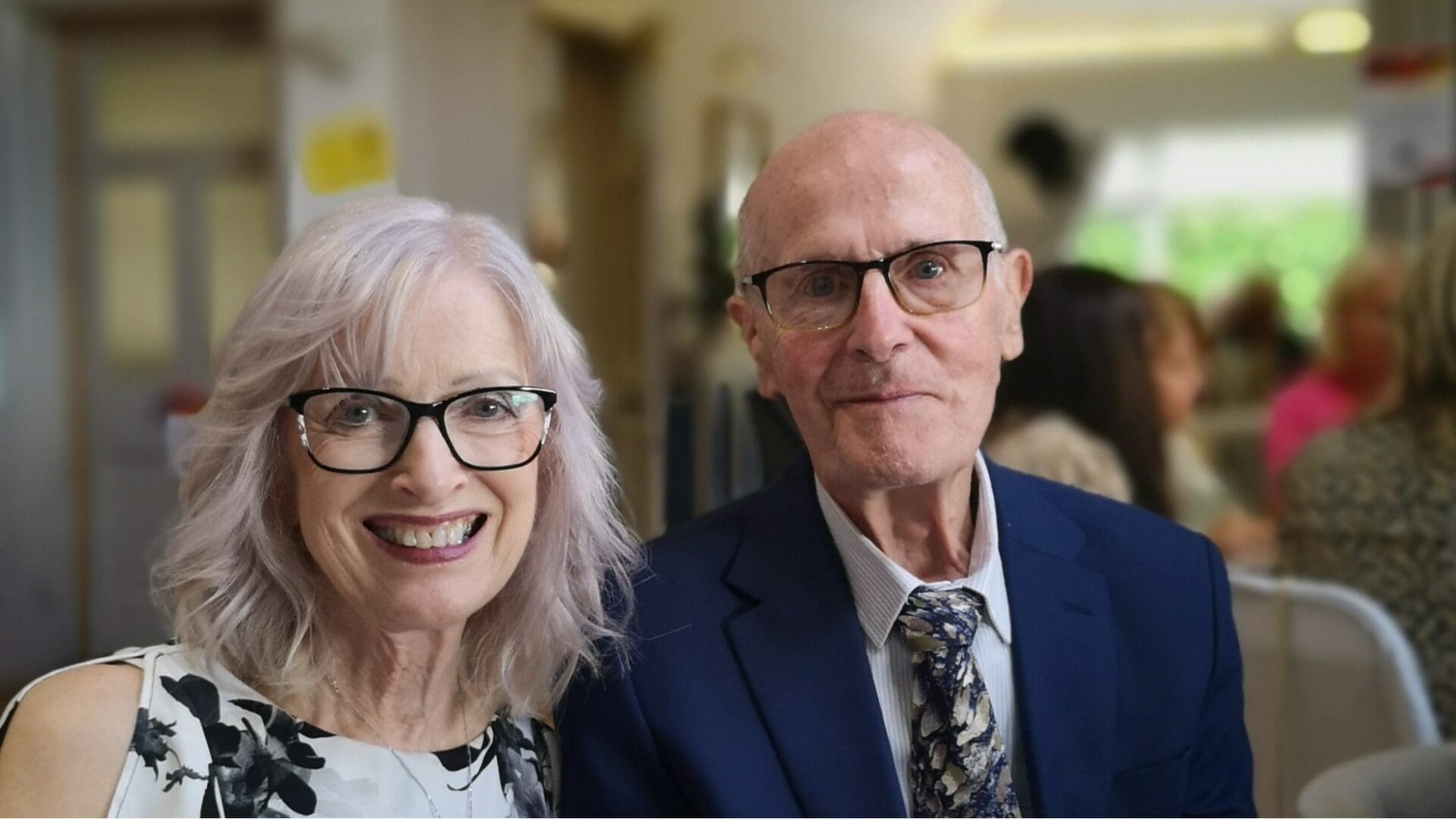
My husband Frank and I officer, and I was a social worker. Frank has always been kind, generous, caring and the life and soul of the party. We’ve been married for 41 years; it was the second marriage for both of us. We have three children between us, and four grandchildren.
Frank was an active part of the community in Wolverhampton, and had lots of different interests. Wolverhampton had a big music scene in the 1960s and Frank was in a pop group. He played guitar and sang and even made a couple of records. He was also very sporty; he played cricket, badminton and tennis, and is a lifelong Wolves supporter.
“It was hard to see myself as a carer”
In 2015 Frank had prostate cancer, which was successfully treated. But a couple of years after that, we noticed he was having some memory problems. We initially put it down to the hormone therapy he had been receiving, but as time went on, I knew something was amiss. Frank was always a brilliant driver, but he started making mistakes like driving through red lights. When I pointed this out, he didn’t seem bothered, which was very unlike him.
We went to the GP for a memory test, but Frank was so bright and intelligent, he answered the questions without a problem. The doctor diagnosed depression, but I think Frank was feeling depressed because of his memory issues.
I still knew something wasn’t right. I kept pushing for a diagnosis, and Frank was eventually referred to the local memory clinic. Eighteen months after his first appointment, he was diagnosed with Alzheimer’s disease in January 2020, at the age of 76.
“We initially kept Frank’s diagnosis a secret”
Although I knew deep down that Frank had dementia, having it confirmed was devastating. We felt lost, bewildered, stunned and had no clue what to do. At this early stage, we had no idea of how things would progress, or the range of symptoms Frank would experience.
We initially kept Frank’s diagnosis a secret, apart from telling family and very close friends, but then began to question why we felt embarrassed. Dementia is a physical illness, like other serious illnesses, so we started to tell people and raise awareness.
We’d both retired by the time Frank developed dementia, which I think accelerated his loss of independence. Initially, it was hard to see myself as Frank’s carer. But as time went on, he needed more and more support. Watching him struggle to make sense of things was heartbreaking. He lost interest in a lot of things he loved, like gardening. He forgot how to make a cup of tea and couldn’t follow our favourite TV programmes.
“Sarah reassures me that what I’m feeling is normal”
After Frank’s dementia diagnosis, I had to find everything out for myself. The information wasn’t readily available or given to us. I had to be a detective to find everything.
I found out about Dementia UK through a Google search. I initially called the Helpline having read about specialist Admiral Nurses on Dementia UK’s website, although I didn’t really know what their role was. The Admiral Nurse on the Helpline explained how they support carers. She told me there was an Admiral Nurse in my area and encouraged me to contact her.
As a result of that phone call, around two years ago, Sarah, our Admiral Nurse, started visiting us at home. She became our lifeline.
Sarah has helped me understand more about Frank’s symptoms and suggested ways for us to manage. Frank often became distressed during the evening, and Sarah explained that he was experiencing sundowning: a sense of intense confusion and anxiety that often affects people with dementia towards the end of the day. She gave me practical tips, like trying to keep things calm in the evening and making sure the lights were on as it started to get darker outside. Sarah suggested different distraction techniques for when Frank became agitated, and explained how important it was to make sure he went to bed as soon as he was tired, to ensure he was rested.
Sarah is a great emotional support. She listens if I’m having a bad day and reassures me that what I’m feeling and experiencing is normal. I have a fantastic family, but I don’t like to lean on my children or worry them. Sarah is someone outside the family who I can be completely honest with. I can let myself be upset and frustrated, and she is totally non-judgmental.

“Moving Frank to a care home was the hardest decision”
Frank’s health declined gradually for a number of years, but over the last few months it has really accelerated. His mobility became very compromised, and he now can’t walk without help. He was having regular falls at home, and I realised that he needed more care to keep him safe.
Last Christmas, I wasn’t very well and realised I couldn’t keep caring for Frank at home on my own. It was the tipping point, and I started looking for a care home.
Moving Frank to a care home was the hardest decision of my life, but I know there is no way he could manage at home now. The care home is nearby so I visit him every day. We actually get to spend more quality time together, which I think is better for our relationship. The staff are fantastic, kind and caring, which I am so grateful for.
“Sarah has got my back”
Even though Frank is in a care home now, Sarah still supports me. It has recently become difficult to get Frank in and out of the car to take him to dementia groups. I asked Sarah if I was causing more harm than good by taking him out, but she reassured me that I was doing the right thing. She told me that it’s good for Frank to have stimulation and be in different environments, and that he might be taking in more than we think.
I know I can contact Sarah whenever I need to, and she will get back to me. She gets it and is a great confidant. Sarah has got my back.