
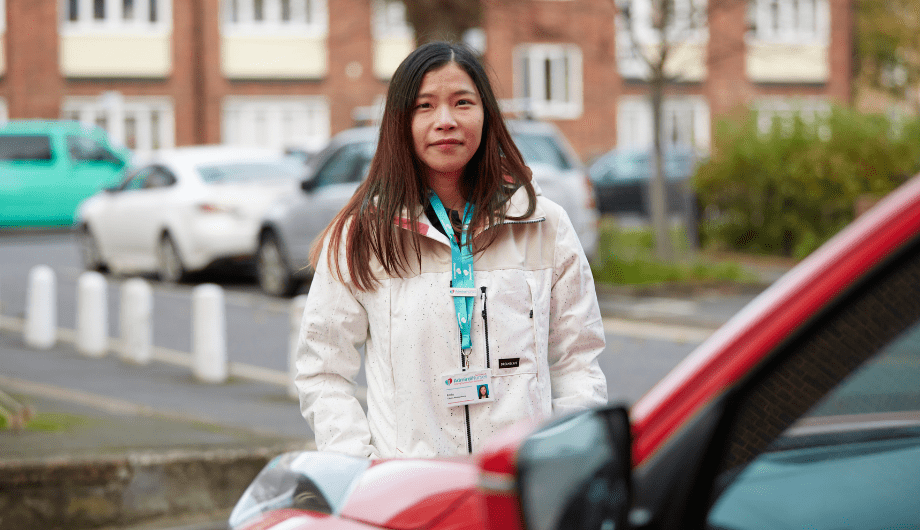
Getting to know Admiral Nurse Emily
Emily, who is a dementia specialist Admiral Nurse supporting families from London Chinese communities, shares why she became a dementia specialist nurse
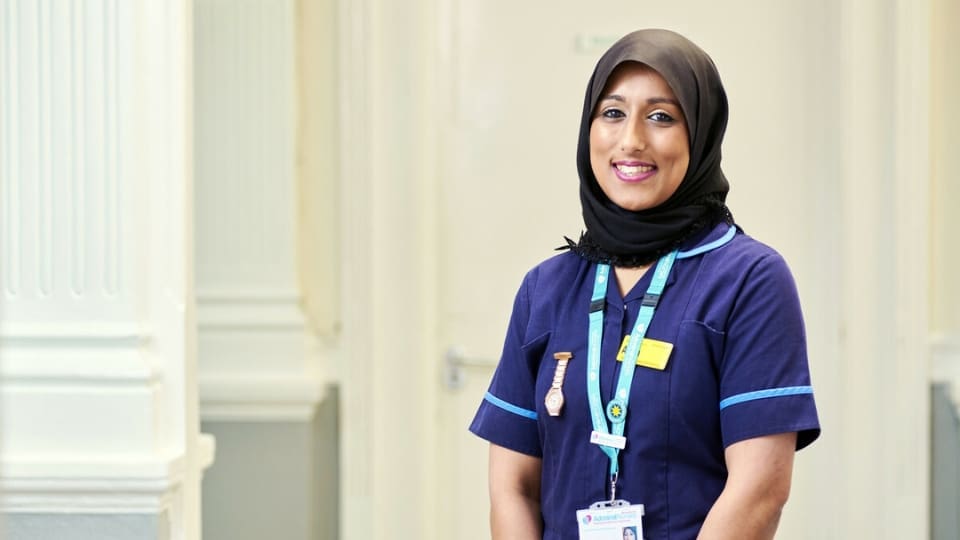
Admiral Nurse Asma Pandor shares her story and reflects on what South Asian Heritage Month means to her.
I have spent the large majority of my nursing career working on elderly care wards at Gloucestershire Royal Hospital. Throughout this time, I have developed a strong foundation in person-centred care and have come to deeply appreciate the importance of maintaining dignity in later life. I have also gained valuable hands-on experience supporting people living with dementia.
I’ve been working as an Admiral Nurse at Gloucestershire Royal Hospital since November 2020, where I continue to support people affected by dementia and their families with compassion and expertise.
I was very fortunate to already be working as an Admiral Nurse when my dad was diagnosed with a rare form of dementia. Caring for him was both emotionally challenging and profoundly meaningful. Being by his side through the final stages of his life gave me a deeply personal understanding of the impact dementia has — not only on the person with the diagnosis but also on their loved ones. This experience further strengthened my passion for specialist dementia care.
There is no specific word for dementia in most South Asian languages, which highlights the lack of understanding of the conditions. Dementia can be highly stigmatised, with some families even thinking dementia is ‘madness’ or an ‘evil spirit’. Other families may see dementia as a normal part of ageing. This means people are less likely to be diagnosed or access mainstream services.
Language barriers may prevent some people from accessing support. Older people may not speak English fluently, and some people living with dementia may revert to their mother tongue. This makes it difficult for them to access services and communicate with healthcare professionals. In addition, mainstream dementia services may not always understand or accommodate cultural needs such as food preferences, gender-specific care, religious practices or multi-generational households.
There’s often a strong cultural expectation in the South Asian community to care for relatives within the family home. Families may feel guilt or shame about seeking support from carers or moving a loved one into a care home. Caring responsibilities often fall on women, leading to them feeling particularly isolated and unsupported.
I feel that treating people as individuals is the most important aspect in providing the best care. I try to avoid assumptions and ask what matters to them, what they need and what they’re comfortable with. I show that I am genuinely open, interested and respectful. That alone can build immense trust.
I often use professional interpreters to help me communicate with families. I ask families to teach me important phrases to help me build a relationship with the person with dementia, and sometimes use flash cards and visual aids to help with communication.
Family plays a crucial role in many South Asian cultures, so I always try to involve family members in decisions where appropriate. I try to overcome the stigma around dementia by taking time to explain diagnoses clearly and compassionately and giving space for questions. Respecting gender preferences is also important as many patients may prefer care from someone of the same gender.
Dementia is often misunderstood in South Asian communities – seen as a normal part of ageing, a mental illness, or something to be kept secret due to stigma. We need more community-led education campaigns in South Asian languages; outreach in places of worship, community centres and GP surgeries; and culturally appropriate videos, leaflets and events that explain dementia in relatable ways.
Many older South Asian people may not speak English confidently which can make it hard for them to engage with services. We can improve this through the use of professional interpreters, not family members; translating materials into South Asian languages such as Punjabi, Urdu, Gujarati and Bengali; and training staff around language and literacy differences, especially during assessments and care planning.
Mainstream dementia services may not reflect South Asian values or family structures, leading to mistrust or lack of engagement. We need more staff from diverse backgrounds and/or with cultural competency training; services that respect religious practices, gender preferences and dietary needs; and dementia care that understands and respects the role of extended families.
Many South Asian families only seek help at crisis point, often after struggling in silence. We need better education for GPs and primary care teams on early signs of dementia in minority ethnic people; routine, culturally appropriate memory screening for high-risk groups; and more community-based support, for example from Admiral Nurses, dementia navigators or link workers who understand South Asian culture.
Families may not trust services if they feel invisible or misunderstood. We need better representation of South Asian people in dementia awareness campaigns, research and media; more involvement of South Asian people with dementia and carers in co-producing services and policy; and active inclusion of diverse voices in local and national strategy planning.
South Asian Heritage Month is a time for me to reflect on my Indian heritage and how that shapes who I am. It’s a chance to celebrate the richness of Indian culture – our values, language, food, music, traditions – and to honour the contributions our community has made to society. It also gives space to talk about the challenges we still face, particularly around topics like health, ageing and dementia, where stigma and lack of awareness can have a real impact.
As someone who works in healthcare and has supported my family through illness, I know how important it is for services to be culturally aware and inclusive. This month is not just about looking back at history – it’s about embracing who we are with pride and making sure our stories, voices and experiences are visible and heard.
Emily, who is a dementia specialist Admiral Nurse supporting families from London Chinese communities, shares why she became a dementia specialist nurse
Access a range of our leaflets in languages including Bengali, Gujarati, Punjabi, Tamil (Sri Lanka), Urdu, Welsh, Polish, and Chinese (traditional and simplified)
Whether you have a question that needs an immediate answer or need emotional support when life feels overwhelming, these are the ways our dementia specialist Admiral Nurses can support you.