

Employment and young onset dementia
A diagnosis of young onset dementia often affects the person’s ability to work. Read how dementia may affect employment and how to manage the changes.
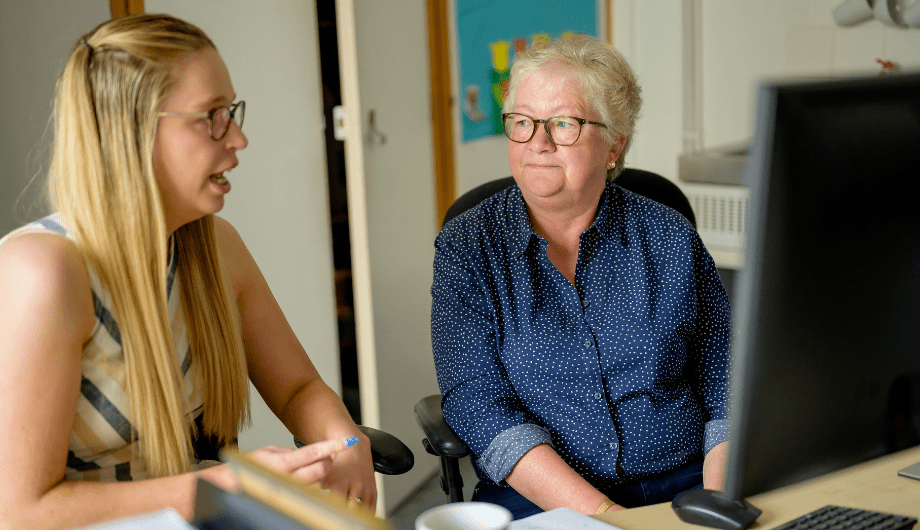
As an employer, supporting an employee with dementia requires empathy, awareness, and a clear understanding of your legal responsibilities. Making reasonable adjustments and fostering an inclusive workplace culture can make a significant difference to an employee’s wellbeing and ability to remain in work.
Employees who care for a person with dementia will also need understanding and support to help them manage their work and caring responsibilities.
When an employee discloses a diagnosis of dementia, managers should approach the situation with empathy and care. This will help the employee feel supported and avoid any misunderstanding about how their diagnosis may affect their employment.
Top tips for responding to your employee’s diagnosis:
Dementia is the umbrella term for a group of illnesses that, over time, cause damage to the brain and its functions. There are over 200 subtypes of dementia and everyone affected by the condition will have their own experience, but it primarily affects thinking, memory and communication. These issues may make work feel more difficult for the employee and result in distress, embarrassment, and a loss of confidence.
Dementia is a progressive condition, so while initially, a person with dementia may be able to continue to work with the right support, over time, work will become more challenging and overwhelming.
Dementia affects everyone differently, but you might notice some changes in behaviour in an employee with dementia. For example, they may react with frustration or distress if tasks do not go to plan.
They may also have problems with communication, such as struggling to follow a conversation or find the right words.
An employee in the early stages of dementia may struggle with tasks that they previously did not. They may:
A person with dementia may gradually withdraw from conversations and socialising. This can be a response to the growing awareness that certain things have become more difficult — for instance, losing track of conversations or struggling to find the right words. Overstimulating environments, such as busy or noisy rooms, can also cause distress and prompt a person to retreat.
It is also common for people with dementia to suffer from depression and anxiety, which may cause a person to become quieter or more withdrawn.
“Steve also failed some training at work which was unlike him – he had never failed anything before in his whole career. That really knocked his confidence. It sent him into a depression, and people at work started to notice that he wasn’t himself.”
– Tracy, whose husband Steve lives with young onset dementia
Many people with dementia continue to work after their diagnosis. This may be necessary financially, especially as younger people with dementia may still have commitments like a mortgage or rent and dependent children. As an employer, there are many things you can do to support them.
It is important to foster relationships where employees feel comfortable discussing their needs and challenges. There can be a stigma associated with dementia, but talking openly about it with the employee and listening to their experiences can help to combat that. Accessing dementia awareness training for yourself and other staff can also help people understand the condition and create a more supportive environment.
Training employees in dementia awareness is crucial to providing better support for employees and customers with dementia. It can help to:
To find out how we can support you with dementia training for your organisation, please email dementia.work@dementiauk.org.
While some people with dementia may be able to remain in their current role for some time, others may find their diagnosis has an immediate impact. For example, a supermarket employee may be able to continue in their position with adjustments, but a builder who works at height and is having balance problems may find their diagnosis compromises their own safety or that of others.
If you are unsure whether it is safe or appropriate for the person to continue in their role, please seek professional advice. This could be from your HR Team, if you have one, Employer Services at Jobcentre Plus or Acas.
We have produced a free downloadable guide, which includes information to help you support the needs of customers affected by dementia, as well as employees who are living with or caring for someone with the condition. It covers key topics like: employers’ responsibilities, noticing changes in an employee, employees rights, supporting carers in the workplace and more.
Thanks for downloading! We’re only asking for your email so we can measure downloads and ask for your feedback. We won’t sign you up for any marketing communications, but if you'd like to stay in touch, sign up for our newsletter by clicking "Subscribe to our newsletter" at the bottom of this page.
We have also produced a free, downloadable guide to help employees manage their working life if they're living with, or caring for someone with, dementia. Written by our Admiral Nurses, it contains essential advice for people who are working and living with dementia. It also contains information and advice for people who are working while caring for someone with a dementia diagnosis.
Thanks for downloading! We’re only asking for your email so we can measure downloads and ask for your feedback. We won’t sign you up for any marketing communications, but if you'd like to stay in touch, sign up for our newsletter by clicking "Subscribe to our newsletter" at the bottom of this page.
Dementia is classified in law as a disability, so it is essential to understand your employee’s rights.
Disability is one of nine ‘protected characteristics’ under the Equality Act 2010. This means people with a disability – including dementia – are legally protected from discrimination and have certain rights at work:
These are adaptations to the person’s role, work schedule or working environment to allow them to do their work. As an employer, you have the duty to make these adjustments.
It is unlawful to discriminate against employees directly or indirectly on the basis of disability. This means you cannot treat an employee less favourably because they have dementia.
From the first day of their employment, your employee has the right to request flexible working under the Employment Relations (Flexible Working) Act 2023. This could include part-time working, flexi-time, job sharing, or working from home. This right applies to all employees – not just those with disabilities.
You have two months to respond to the request. You can reject it if there is a genuine business case against it, but you must tell your employee the reasons, and they may be able to complain to an employment tribunal if they believe they are not reasonable.
The rules are slightly different in Northern Ireland, eg employees do not have the statutory right to request flexible working in the first 26 weeks of working for an employer.
There are five different categories of workplace discrimination that employees must be protected from:
Direct discrimination — putting the person at a disadvantage because of their disability. For example: the person is selected for a promotion. Before taking up the new position, they tell their employer that they have been diagnosed with dementia. The employer revokes the job offer.
Indirect discrimination — putting an employee at a disadvantage because of a rule or policy that applies to all staff members but particularly affects them because of their disability. For example: an absence policy is introduced where disciplinary action results if employees take more days off than are allowed in the policy. This discriminates against the person with dementia (and those with other disabilities or health conditions) if they need to attend frequent medical appointments.
Failure to make reasonable adjustments — refusal to make reasonable adjustments to allow the person with dementia to work, with no business case for doing so. For example: the person with dementia requests to work from home one day a week. The employer refuses because they prefer employees to work in the office, even though the person’s job can be done efficiently from home.
Harassment — unpleasant or hostile behaviour towards the person with dementia – from the employer themselves or other colleagues. For example: the person with dementia sometimes struggles to find words. Their colleagues start to make fun of them by mimicking their hesitant speech.
Victimisation — treating someone unfairly because they have made a complaint or a claim of discrimination at work. For example: the person with dementia has made a complaint to HR about their manager refusing to implement a reasonable adjustment. Shortly after, they are put on an unjustified performance improvement plan.
It may be lawful to dismiss a person with dementia on capability grounds if you can prove:
We recommend seeking specialist advice before beginning any performance management plan, for example from your HR Team, Acas or an employment lawyer. Our Dementia at Work Team can also offer guidance – please contact us at dementia.work@dementiauk.org
Reasonable adjustments will be specific to the requirements of the person with dementia. They will need to be reviewed regularly to ensure that they are still meeting their needs. You may need to change the adjustments or introduce new ones as the person’s condition progresses.
What is ‘reasonable’ depends on each situation. If possible, it is a good idea to arrange an occupational health assessment to devise an action plan, with the full involvement of the person with dementia. This should include an evaluation of their current role, taking into consideration how dementia affects their ability to do their job. Some possible reasonable adjustments an occupational health team may suggest include:
With each suggested adjustment, you as an employer should consider carefully if the adjustment:
An employer does not have to change the basic nature of the job. For example, if someone working in a call centre asks for a job that does not involve taking calls, this might not be reasonable if there is no other job to give them.
Providing flexible working hours can make a significant difference to a person with dementia, allowing them to manage their condition more effectively.
A reduction in hours (if needed or requested) and enabling supported homeworking are examples of reasonable adjustments that may be appropriate.
Making small adjustments to your employee’s physical working environment, such as clear signage or the use of memory aids, could also help them manage their day-to-day work more easily and efficiently.
Reasonable adjustments might also include providing assistive equipment eg alerts, reminders, voice recognition software.
An employee with dementia may still be able to work, but may struggle with certain tasks more than others. Therefore, finding different tasks and responsibilities for them that they can manage more easily can help them stay in work longer.
“Over time, as Yvonne’s dementia progressed, her employer made gradual adjustments to her role so she could continue to work. They changed her working hours, so she didn’t have to do shifts early in the morning, when she often struggled. They reduced the number of aisles she worked in, so it was less confusing, then reduced her hours overall. By the time Yvonne stopped working, she was working purely at the back-end of the store, cleaning the crates shopping was packed in – a job that suited her perfectly, as she was so meticulous.”
– Trevor, whose wife Yvonne lives with young onset dementia
Deciding when to stop working due to dementia is a personal decision that will be influenced by how the person is affected by the condition, the nature of their job, and their personal circumstances.
There is no definitive time to stop working, but if the person is finding it increasingly difficult to manage tasks or no further reasonable adjustments can be made to help them keep working, it could be time for them to consider leaving – either to move to a new job that they feel more able to cope with, or to retire.
If you believe the employee is reaching a point where they need to leave work, it is essential to handle it sensitively. Do not put your employee under pressure to leave work, as this could be considered discrimination. Likewise, you cannot make the person redundant purely on disability grounds.
If you need to broach the subject of your employee needing to leave work:
It can be difficult to tell if an employee is showing signs of dementia or if there is another cause, but it is important to be aware that it may be an issue.
People with possible dementia symptoms may not recognise or acknowledge their difficulties. They may lack insight or be in denial about their symptoms. They may have developed coping strategies to deal with specific problems or have colleagues who are prepared to cover for them. Or they may be aware of symptoms but are trying to conceal them. Understand also that the employee may be worried about their future and reluctant to talk about their symptoms or seek support.
If you decide to speak with an employee who you believe is showing possible signs of dementia, keep in mind that many other common health conditions can cause symptoms that can look like dementia. If you suspect an employee has dementia and has not disclosed their diagnosis, you might want to consider encouraging an open conversation. Bear in mind that they may not feel comfortable talking to their immediate manager – if you have an HR Team, you may want to suggest they can talk to them instead.
Usually, an employee does not legally have to disclose a diagnosis of dementia. However, there are some jobs where disclosure is a legal requirement. These include:
The person’s employment contract should state whether they are obliged to tell you or the HR Team about their diagnosis.
Around 700,000 people in the UK care for someone living with dementia. For working carers, support from their employer can make a big difference as they balance the dual responsibilities of working and caring.
“I work for a fantastic company – the management in particular have been so supportive, which has enabled me to keep working full-time while also caring for Helen, with flexibility as well.”
– Glenn, whose wife Helen lives with young onset dementia
If you have an employee who is caring for someone with dementia, be aware that their caring responsibilities can have an impact on their physical and mental health. They may require more understanding and empathy if this affects their work performance. For example, they may be tired from being up in the night to care for the person with dementia, and therefore make a mistake in their work. Rather than a taking harsh approach, speak to your employee about their situation, how it is impacting them and how you can help.
Bear in mind that people who care for someone with dementia do not always identify themselves as carers, so they may not reach out for support. You may need to take the initiative to reach out with support if you know that your employee has a relative or close friend with dementia who they look after.
Here are some tips to help you support an employee with caring responsibilities:
Under the Equality Act 2010, people are protected against discrimination that results from someone they are associated with. This means discriminating against an employee because they are caring for someone with dementia is unlawful.
Employees have the right to take a reasonable amount of time off work to deal with emergencies involving dependants, which could include the person they care for. There is no set amount of time they can take off, and no limit to how many episodes of time off they can take. However, as an employer you may raise concerns if you think it is affecting their work.
Legally, employers do not have to pay an employee for time off for dependants, but some choose to. The employee should refer to the organisation’s policy around time off for dependants.
Flexible working may be especially helpful for employees with caring responsibilities. Like all employees, carers have the right to request flexible working and are able to appeal a decision through an employment tribunal.
Our Dementia at Work Programme provides organisations with a range of services to increase their understanding and awareness of dementia and improve support for employees and customers affected by the condition. To find out how we can support you, for example with information, masterclasses and bespoke training, please contact dementia.work@dementiauk.org.
Our Dementia at Work programme is led by a team of dementia specialist Admiral Nurses who have over 100 years’ experience between them. They are experts in supporting organisations to understand and accommodate the needs of employees and customers affected by dementia.
A diagnosis of young onset dementia often affects the person’s ability to work. Read how dementia may affect employment and how to manage the changes.
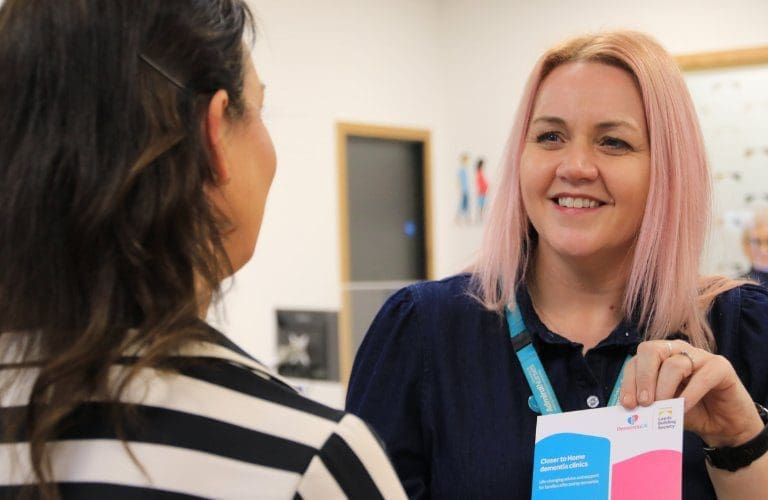
We are passionate about working with companies to make sure no family has to face dementia alone.

Whether you have a question that needs an immediate answer or need emotional support when life feels overwhelming, these are the ways our dementia specialist Admiral Nurses can support you.
With nearly one million people living with dementia in the UK – including over 70,000 with young onset dementia (where symptoms develop before the age of 65) – it is highly likely that as an employer, you will come into contact with people who are living with the condition or caring for someone with the diagnosis.
It is important to be aware that younger people who are still working are more likely to have a rarer form of dementia that has different symptoms from the more common types and so may be harder to recognise. For example, they may experience changes in their personality, behaviour and social functioning, rather than memory.
It is important to respect the privacy of an employee with dementia by keeping their diagnosis confidential. Ask them directly whether they want their colleagues to be informed. If they do, ask whether they would like to share this themselves or would prefer you to do so on their behalf.
Often, reasonable adjustments will involve the support of other employees – for example, if they are asked to take on an element of their role that the person with dementia can no longer do. It can therefore be beneficial for the employee to tell their colleagues about their diagnosis so they understand the reason for the changes and why their support matters.
Access to Work is a scheme to help people with a mental or physical health condition or disability to get or stay in work. Through the scheme, the employee can apply for:
Access to Work grants cannot be used to pay for reasonable adjustments that you, as an employer, are obliged by law to make. However, they may be helpful in implementing an adjustment that you are unable to make for business reasons, eg if the cost of paying for a support worker would be to the detriment of your business.
As an employer, you may need to pay some of the costs of fulfilling Access to Work requirements yourself and claim the money back.