
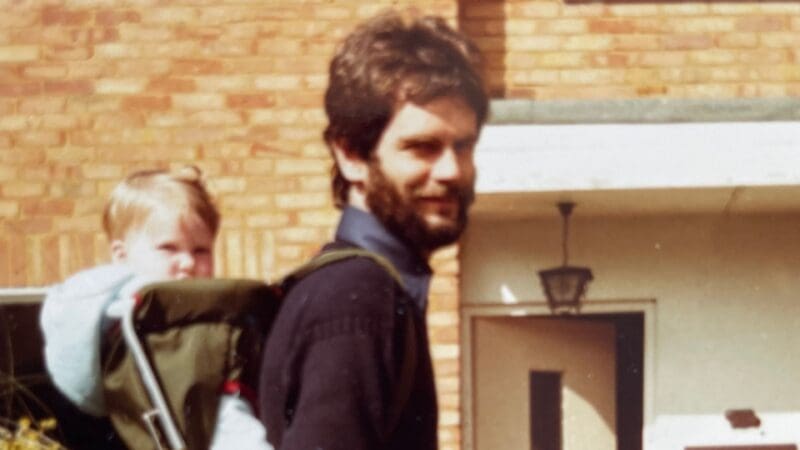
Kate’s story – “I’m a classic example of a sandwich carer”
Kate reflects on the challenges of being a sandwich carer and shares how her Admiral Nurse has supported her family.
Caring for a person with dementia can be physically and mentally demanding, so it’s vital that you also look after yourself. Here’s how you can stay well, maintain healthy relationships, and get the support you need.
Many people who have a family member with dementia find themselves in the role of full-time or part-time carer. And when you are looking after someone around the clock, you might find it difficult to think about your own needs, get enough rest, or take part in activities you enjoy.
But you may not be able to continue caring for the person with dementia if you neglect your health, or if you don’t have enough support or time to recharge your batteries.
It’s a bit like putting on your own oxygen mask before helping someone else during a flight emergency: by looking after yourself first, you’re more likely to have the strength to look after the person you care for.
It’s important not to ignore your own health needs.
Niggling pains or feelings of anxiety or depression, for example, might seem like the least of your worries.
But if you are having physical or mental health symptoms, you should visit your GP so any illnesses or conditions can be properly diagnosed and treated.
Other tips to keep you healthy include:
As the person’s dementia progresses, you may find that your caring role overtakes your relationship with them as a spouse, family member or friend. But while your relationship will change, it can still bring you both enjoyment.
Rather than focusing only on the care you have to provide, try to find activities that you can still do together to strengthen your connection.
You could try:
You may feel like you have no time to spend with other family members and friends, or that having a life outside of your caring responsibilities is unimportant or even selfish.
However, it’s really important to ensure you stay in contact with friends and family.
This can give you opportunities to talk to other people about what you’re going through and allow them to support you, as well as giving you vital time out to enjoy each other’s company.
Keeping up with your other relationships and activities that bring you pleasure means that when your caring responsibilities change or stop – for example, if the person with dementia goes into a care home and no longer needs as much care from you – you still have things to enjoy and people to spend time with.
Even when time feels limited, taking small moments for yourself can make a meaningful difference to your wellbeing. The following simple strategies may help reduce stress and promote calm.
This technique involves slowly tensing and then releasing different muscle groups to help the body relax, holding each tension for 5-10 seconds before relaxing. You can do this sitting, standing or lying down.
Start from your feet by curling your toes, then move through your calves, thighs, stomach and chest, pairing release with a deep breath. Continue with your hands, arms and shoulders, gently tensing and releasing. Finish by gently stretching and then relaxing your neck, and scrunching your facial muscles then relaxing. Finish with five slow, deep breaths.
This exercise brings your attention to the present moment using your senses, creating a sense of calm and clarity. Name five things you can see, four things you can feel, three things you can hear, two things you can smell and one thing you can taste.
Breathing techniques can be helpful during moments of stress or overwhelm.
Incorporating gentle stretches throughout your day, such as neck tilts or shoulder rolls, can release tension. Pair each movement with slow, deep breathing.
Practising gratitude builds resilience, reduces levels of stress hormones and gives us something positive to focus on, even during challenging moments.
Take a moment to think about someone or something you’ve felt grateful for today or this week. Notice the positive feelings that arise. You could also keep a gratitude journal, writing down three things you’re grateful for each day.
Listening to music can provide comfort and relaxation during stressful moments. Try creating a playlist of your favourite tracks or soothing sounds to listen to whenever you need a moment of calm.
For any questions or concerns about looking after yourself as a carer or any other aspect of dementia, you can contact our free Dementia Helpline on 0800 888 6678 (Monday-Friday 9am-9pm, Saturday-Sunday 9am-5pm, every day except 25th December), email helpline@dementiauk.org or you can pre-book a phone or video call at a time that suits you.
Our virtual clinics give you the chance to discuss any questions or concerns with a dementia specialist Admiral Nurse by phone or video call, at a time that suits you.
Kate reflects on the challenges of being a sandwich carer and shares how her Admiral Nurse has supported her family.

Mike reflects on the importance of the Nationwide Building Society dementia clinics in North Ayrshire, Scotland.

Harjit reflects on the support she received from Admiral Nurse, Tina, whilst her mum was in hospital.