
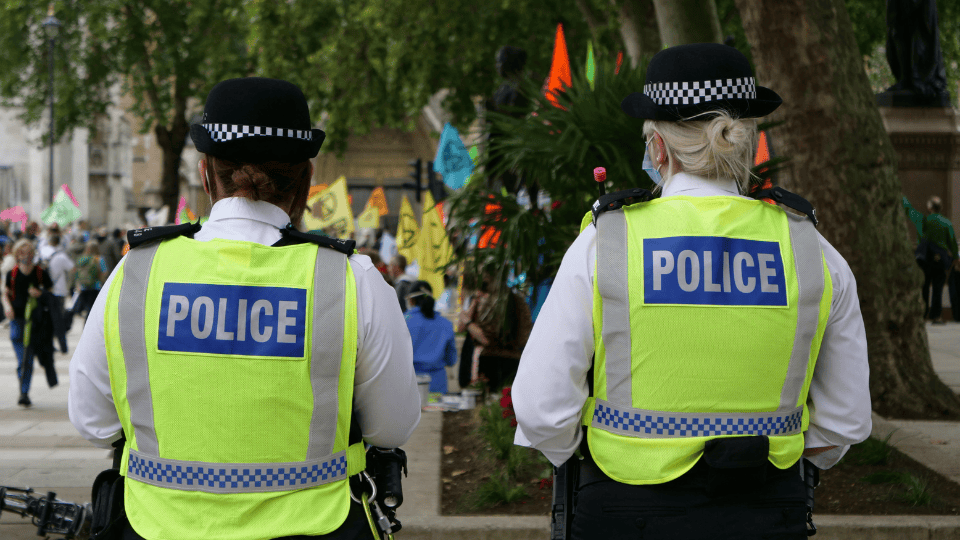
This guidance is for police officers and search and rescue professionals responding when a person with dementia is missing. Written by dementia specialist Admiral Nurses, it explains how dementia may affect the person’s behaviour, movement and communication, and how to support them safely when they are found. You may also find the Herbert Protocol helpful, as it enables families to share key information that could help when a person goes missing.
A person living with dementia who is missing may make decisions that seem unexpected from the outside. These decisions are often shaped by changes in memory, perception and judgement.
Everyone will respond differently when they go missing. The information on this page should be used as a guide to how a person with dementia might behave if they go missing and how they might respond, rather than to predict exactly where they will go.
How dementia may affect a person’s behaviour while they are missing
Dementia can make it harder for a person to retrace a route, interpret the environment and judge risks such as traffic, water or uneven ground.
A person with dementia may:
- set out with a clear purpose
- continue straight ahead when a decision is needed
- follow linear features such as roads, paths, walls, fences or rivers
- move away from buildings, crowds, noise or bright lights towards somewhere quieter
- find it difficult to remain in one place while waiting for help
- continue moving despite tiredness, pain, cold, heat or worsening weather
- travel further or enter terrain that family members would not expect them to visit
This means the person may not remain near their last known location, even if they had agreed to wait there.
How the person may present when found
A person with dementia may not realise that they are missing or believe that they are in danger. Lights, radios, multiple people speaking and unfamiliar physical contact may feel frightening or threatening.
The person may:
- continue walking, pace or repeatedly try to leave
- hide or move away from rescuers
- refuse food, drink, medical assessment or transport
- appear suspicious, frightened or confused
- shout, push someone away or lash out if they feel trapped
- become quiet, withdrawn or unable to respond
- freeze, avoid eye contact or struggle to follow instructions
Behaviour is communication. Refusing help may mean that the person does not feel safe. Trying to leave may reflect a belief that they need to reach an important person or place. Shouting or physical resistance may be a response to fear, pain or feeling controlled rather than a deliberate attempt to intimidate or harm another person.
Supporting the person when they are found
Prioritise any immediate danger or urgent medical need.
Where the situation allows, slow the interaction down and focus first on helping the person feel safe.
- Ask one person to take the lead in communicating
- Approach slowly and give the person space
- Avoid surrounding them or blocking their route unless this is necessary for immediate safety
- Introduce yourself and use the person’s preferred name
- Explain what is happening one step at a time, using short, clear sentences
- Keep your voice, facial expression and body language calm
- Reduce noise, bright lights, radio traffic and the number of people speaking
- Allow extra time for the person to understand and respond
- Acknowledge how they appear to be feeling rather than correcting their account of events
Use information from the Herbert Protocol or the person’s family to guide the conversation. Talking about familiar people, places or interests may help build trust. Address any practical needs such as warmth, food, a drink or pain relief.
Build rapport with the person before attempting to redirect, assess or move them. Walking alongside them while speaking calmly may feel less confrontational than repeatedly asking them to stop.
If trust does not develop, consider changing the lead communicator. This is not a failure. A different voice, manner or approach may be a better fit for the person.
How can Dementia UK support you
To speak to a dementia specialist Admiral Nurse for information, advice, and support on any aspect of dementia, please contact our free Helpline at 0800 888 6678 (Monday-Friday 9am-9pm; Saturday, Sunday and bank holidays 9am-5pm, every day except 25th December) or email helpline@dementiauk.org.
Alternatively, you can book a free, 45-minute phone or video appointment with an Admiral Nurse.
Our Dementia at Work Team works with organisations to provide specialist advice and guidance to help them better support the people with dementia and carers who they may have contact with.
We also provide free, confidential online appointments in dedicated clinics for members of the police who are living with dementia or caring for someone with the condition. Book an appointment via Oscar Kilo.