

Kate’s story – “I’m a classic example of a sandwich carer”
Kate reflects on the challenges of being a sandwich carer and shares how her Admiral Nurse has supported her family.
When someone lives with dementia, they may experience stigma or discrimination. This is usually because of people’s negative perceptions of what dementia is, who it affects, and how it affects them. This may lead to the person being treated differently, or sometimes, people taking advantage of them.
Stigma is a negative or unfair belief based on a stereotype about a person – such as their age, race, religion, gender, sexual orientation or disability. Some common stigmas about dementia include:
Sometimes, people with dementia feel stigma towards themselves – for example, they might think they are ‘stupid’ or ‘a burden’ due to their diagnosis. This is called self-stigma.
Both stigma from other people and self-stigma can be hard to deal with and can have a negative impact on a person living with dementia.
Stigma against people with dementia is often the result of a lack of understanding about the condition. Other causes of stigma and discrimination against people with dementia include:
Stigma is often caused by incorrect beliefs that people hold about people with dementia. Here are some of the common myths about dementia.
Myth: people with dementia do not understand what is going on around them.
Reality: dementia is different for everyone. You should not assume anything about a person with dementia and their abilities. A person in the early stages of dementia can likely still care for themselves and make their own decisions. A person with advanced dementia may not be able to communicate as they used to. But it is still important to treat them with respect and learn how to understand and communicate with them.
Read tips for communicating with a person with dementia
Myth: people with dementia always experience behaviour changes like aggression.
Reality: not every person with dementia will experience changes in behaviour. Some people living with dementia may experience impacts on their mood, personality and behaviour, but it is different for everyone. These changes are usually due to difficulty with communication and expressing their needs, memory problems and cognition challenges.
Myth: people with dementia can not work.
Reality: people who are diagnosed with dementia are often still capable of working for some time. Employers should carry out an occupational health assessment together with the person with dementia, then make adjustments to help the person continue working for as long as they are able.
Read more about employment and young onset dementia
Myth: if a person is diagnosed with dementia, their life is over.
Reality: many people still live full and meaningful lives after being diagnosed with dementia. While some things are likely to change, there are many ways to live well with dementia. There are also various living aids and assistive technologies that can help a person with dementia stay independent.
The media often contributes to stigma about dementia by using unhelpful language such as ‘dementia sufferer’, ‘demented’, ‘burden’ or ‘death sentence’. Sometimes, people living with dementia are portrayed in stereotypical ways in TV shows. This can reinforce stigma and discrimination in society as a whole.
Various research studies suggest that people from minority ethnic communities in the UK are less likely to be diagnosed with dementia, often because they are reluctant or less able to seek medical advice and more likely to wait until a later stage of dementia to reach out for support.
Research suggests that this is partly because of cultural stigmas, as well as a lack of culturally-appropriate healthcare provision.
Each community has a unique attitude to dealing with mental health and conditions like dementia, informed by its history and culture. For example, according to the Race Equality Foundation, African Caribbean communities in the UK are more likely to value being resilient and ‘strong-minded’. Therefore, it can be seen as taboo to seek help for dementia symptoms.

Mutsai Hove Bird, Admiral Nurse
Mutsai Hove Bird, dementia specialist Admiral Nurse“For first-generation migrants to the UK the experience of migration, and of coping with the lifetime impact of discrimination, reinforces a cultural expectation of resilience that makes individuals reluctant to seek help for health and social care problems.”
People from various minority ethnic communities in the UK may also be nervous that they might experience discrimination from healthcare providers.
In some languages, including many spoken by South Asian communities, there is no specific word for ‘dementia’. On one hand, this means that dementia symptoms may be viewed as a normal part of ageing, so a person experiencing them does not receive a diagnosis or support. It can also add to the stigma around dementia, as words like ‘crazy’ or ‘mad’ might be used to describe the person instead.
In some cultures, there are spiritual beliefs that dementia is caused by God or evil spirits. For example, in some Muslim communities, mental health problems or conditions like dementia are thought to be caused by black magic or evil spirits called ‘Jinns’. This can lead to a person with dementia and their family being stigmatised and discriminated against in the community.
Sometimes people believe that dementia is passed on genetically, even though this is usually not the case. This can result in increased stigma in communities where arranged marriage is common. People may be stigmatised due to a family member having dementia, because people may worry that the person’s children or grandchildren will develop the condition. This can also lead to family members of the person with dementia symptoms keeping them secret and resisting getting a diagnosis.
In some cultures, particularly Muslim, Hindu and Sikh cultures, great importance is placed on the family providing care for its older members. This can mean that people from these cultures are less likely to reach out for external support, because there can be a stigma around doing so.
Healthcare providers may also be less likely to offer support to people from these communities because of their own assumptions that they can take care of everything within the family.
As well as these stigmas, in the UK there can be a lack of specialist, culturally sensitive support for accessing dementia diagnosis and support.
Dementia UK is committed to providing person-centred support that is sensitive to the needs of people and families from all different communities. Our Admiral Nurses work with people from a range of minority ethnic communities to help break down stigma around dementia. We recognise that there is still more to learn about the full impact of dementia on different communities, and we are dedicated to developing the support we offer.
People with dementia who identify as lesbian, gay, bisexual, transgender, queer/questioning or another identity under the LGBT+ umbrella often face a double stigma due to both their sexuality/gender identity and their dementia. This makes some LGBT+ people wary of accessing health and social care services.
They may be reluctant to seek a dementia diagnosis or support in case they encounter misunderstanding, judgement or discrimination. They may also be anxious about going to support groups or social activities due to fear of judgement or negative attitudes from other participants. This can lead to social isolation.

Mike and Tom
Mike, whose husband Tom lived with dementia“When we attended appointments, health professionals would always assume I was Tom’s carer or another relative, never his husband. Assumptions like this are hurtful and disrespectful and can lead to poorer health management. They’re also one of the reasons people from the LGBT+ community are less likely to seek support.”
Discrimination is poor or unfair treatment that often results from stigma and negative stereotypes. People may face discrimination for a variety of reasons, including race, gender, age, sexuality and disability.
People with dementia often face discrimination based on stigma and biased opinions, for example, beliefs that people with dementia should not be left alone, cannot be trusted to make decisions, or cannot look after themselves.
Also, people might not realise that certain symptoms are caused by a person’s dementia and blame them for the way they are behaving – and treat them badly as a result.
For instance, the person may seem uncooperative because they are struggling to understand and communicate, and a family member may think they are being deliberately difficult and become frustrated with them.
Examples of discrimination against people with dementia include:
Family and friends of a person with dementia may also indirectly be affected by stigma and discrimination, for example, people excluding them from social gatherings because they assume they will not be able to attend because of their caring responsibilities. Or a person may be overlooked for a promotion at work if their employer assumes their caring responsibilities will affect their ability to do their job. A child’s friend may not be allowed to visit for a playdate if the friend’s parent is worried about them being around the person with dementia.
Over 70,000 people in the UK live with young onset dementia (where symptoms develop before the age of 65), and for these people, stigma and discrimination can be a significant issue.
Often, the early symptoms of dementia in younger people differ from common perceptions of how dementia typically presents. For example, memory problems are less likely in the early stages, but the person may experience:
Many people assume dementia does not affect younger people, so they may not realise that the changes in behaviour are linked to dementia and think the person is being ‘difficult’, ‘unreliable’ or ‘unpredictable’.
Younger people are also more likely to have a rarer form of dementia with less widely recognised symptoms, which may lead to people making incorrect assumptions about changes in their personality or behaviour.
For example:

Andy (right) and Bernard
Andy, who was diagnosed with young onset dementia aged 55“My employer decided that because of the responsibilities I held in my role as director of a multinational company, I couldn’t continue in my job. They decided that despite not being medically qualified. I know I could have worked for another five years at least.”
Stigma and discrimination can have wide-ranging impacts on a person with dementia. They can lead to:
These things can also have a negative emotional impact and affect the mental health of a person with dementia.
Some people with dementia and their families feel ashamed of the diagnosis because of the potential for stigma and discrimination. They may end up withdrawing from socialising and their usual activities, which can contribute to loneliness and isolation.
Stigma and discrimination can also mean that people with dementia are only able to access specific groups and services for people with dementia, rather than continuing to attend other interest groups.
Experiencing stigma and discrimination may make a person with dementia feel sad, angry or resentful. Some people with dementia may also feel shame or embarrassment if people act negatively to them due to their dementia.
Stigma and discrimination can have an emotional impact on family, friends and carers of people with dementia. They can feel judged and become isolated and lack a good support network.
The emotional impact of stigma and discrimination can lead to mental health issues, or make existing mental health issues worse. For example, worries about how a person is seen because of their dementia can turn into an anxiety disorder, or feelings of shame, guilt and isolation can lead to depression.
There are ways to manage anxiety and depression in a person with dementia. These include physical activity, talking therapy, eating a healthy diet and, in some cases, medication.
Read more about managing anxiety and dementia.
Read more about managing depression and dementia.
Stigma and discrimination around dementia can result in people not getting a diagnosis or waiting longer to get a diagnosis.
A person with symptoms of dementia might be reluctant to seek a diagnosis because they are afraid of how they might be treated once they’re diagnosed. This can lead to delays in getting assessed and diagnosed, sometimes for years – time in which they could have received treatment and support.
It may also mean that they don’t seek help for other treatable conditions that have similar symptoms – like certain infections, vitamin or hormone deficiencies, mental health issues and stress – because they are afraid they will be diagnosed with dementia.
People with dementia are legally protected against discrimination.
Under the Equality Act (2010), it is illegal for people with certain characteristics, including disability, to be treated less favourably or discriminated against – and because dementia is considered a disability, people with the diagnosis are legally protected against discrimination.
People with dementia have a legal right to be protected from discrimination:
Workplace discrimination can be a particular problem for people with young onset dementia.
If the person with dementia feels they have been discriminated against, they can:
For more information about taking action against discrimination in general, you can contact the Equality Advisory Support Service.
For advice on discrimination at work, read our information on employment and dementia, or contact Acas.
People living with dementia and their families have an important role to play in preventing and managing stigma and discrimination. Here are some things to try.
Take some time to educate yourself about dementia. Stigma is often the result of fear and misunderstanding, so developing your knowledge of the condition can help to overcome this. This will help you avoid stigmatising the person with dementia yourself and enable you to pass on your knowledge to others.
Encourage the person with dementia to tell family and friends about their diagnosis. This could help to reduce speculation about what is ‘wrong’ with them. Invite those close to them to talk openly, ask questions about dementia and how it is affecting the person, and listen to what they need.
Recognise the person’s strengths and abilities. Focus on what they can still do, rather than what they cannot.
Support the person to continue with their usual activities. Do not assume that they need to stop as a result of their diagnosis, but be prepared to make adaptations if necessary.
Help the person live as fully as possible. By supporting them to be active and engaged in everyday life, within their capabilities, you will not only help them maintain independence and enjoyment in life, but also challenge the stigma around dementia.
Do not avoid social or public situations. If people with dementia are ‘hidden away’, it can perpetuate shame, stigma and a lack of understanding around the condition.
When making decisions, involve the person with dementia as fully as possible. If they lack the capacity to make a decision or communicate their views, make sure that the decision is made in their best interests.
Avoid being overprotective. If you are concerned that the person may be vulnerable in certain situations, look for ways that they can continue with them safely. For example, if they enjoy cycling but you are worried about them getting lost, you could arrange for a ‘buddy’ to go with them.
Encourage the person to carry or wear a form of identification to alert members of the public that they may need support, such as the Hidden Disabilities sunflower lanyard or ID card.
Work with the person with dementia to compile a life story – a record of their life that can be shared with family, friends and carers to help them understand more about the person as an individual.
Remember that everyone has their own personal views and experiences that influence how they think, feel and behave, but take opportunities to help others understand that the person with dementia is more than their diagnosis.
Get involved in campaigns and groups that raise awareness of dementia to help break down stereotypes and challenge stigma and discrimination and to share experiences and approaches with people in a similar situation.
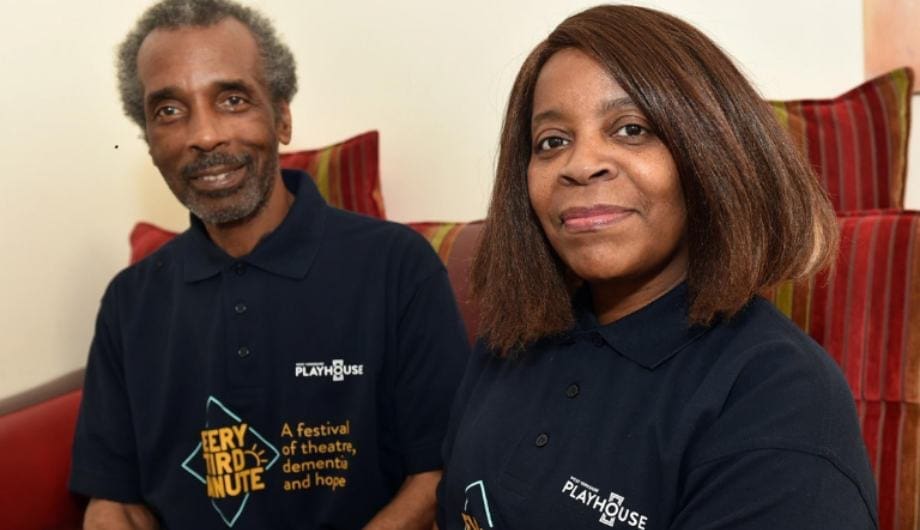
Diana and Eugene
Diana, whose husband Eugene lived with dementia, speaking about the Black Carers’ Dementia Support Group in Leeds“The group is a fantastic way to share information which in turn breaks down stigma and improves understanding of dementia. I have spoken about my own experiences and share everything I have learned in the hope that it helps someone else.”
There are several ways you can advocate for a person with dementia who is experiencing stigma or discrimination:
If you have any questions or concerns relating to dementia, call our free Dementia Helpline on 0800 888 6678 (Monday-Friday 9am-9pm, Saturday and Sunday 9am-5pm), email helpline@dementiauk.org or you can book a virtual appointment with an Admiral Nurse via phone or video call.
Our free, confidential Dementia Helpline is staffed by our dementia specialist Admiral Nurses who provide information, advice and support with any aspect of dementia.
Kate reflects on the challenges of being a sandwich carer and shares how her Admiral Nurse has supported her family.

Mike reflects on the importance of the Nationwide Building Society dementia clinics in North Ayrshire, Scotland.

Harjit reflects on the support she received from Admiral Nurse, Tina, whilst her mum was in hospital.