

How we can support you
Whether you have a question that needs an immediate answer or need emotional support when life feels overwhelming, these are the ways our dementia specialist Admiral Nurses can support you.
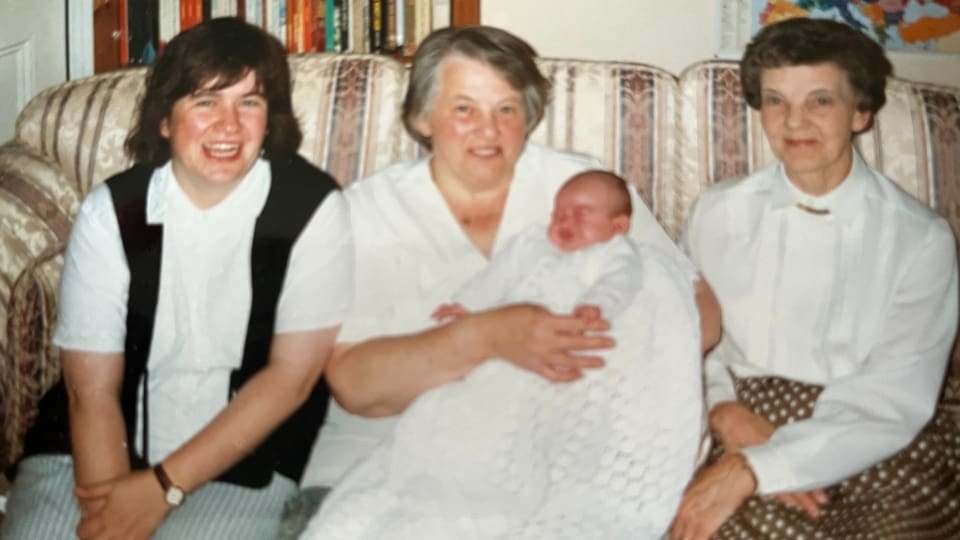
Kerry reflects on her mum’s dementia journey and her experience doing two of Dementia UK’s virtual event challenges.
For Mum, our family was everything. Growing up, I lived with my parents and two brothers. Mum set rules and rudeness was never tolerated, but we all knew we were loved. She had a knack of making comfortable homes even in adverse circumstances.
As a toddler during the Second World War, Mum was evacuated from her home in London. She had a huge array of fascinating stories to tell us. After leaving school, she went to work as a telephonist at a large company, which is where she met Dad.
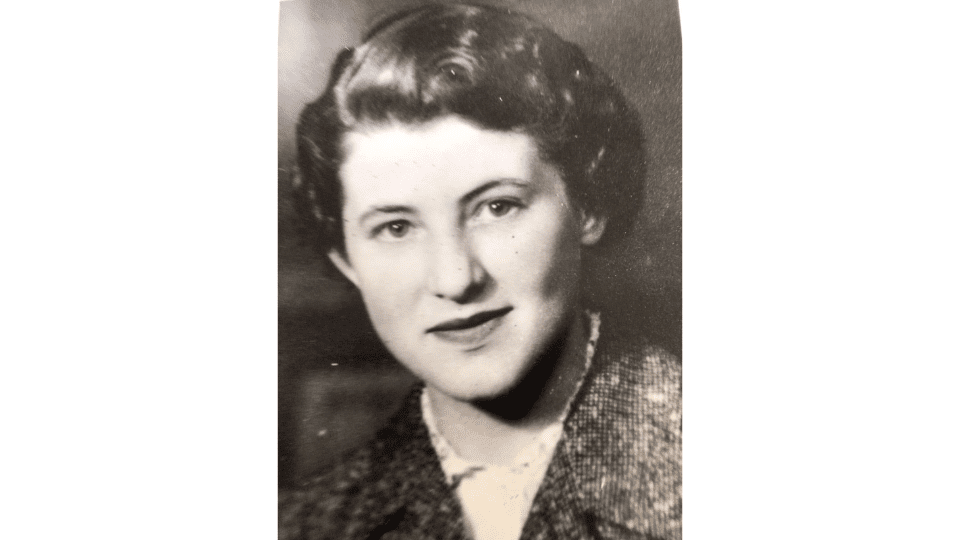
Having left school at the age of 15, at a time when young women of her background were rarely afforded the opportunity to go to university, Mum became a ceaseless champion of education for all. I will never forget how she fought for me to have access to the adult section of our local library after I’d exhausted the children’s section.
Mum always worked hard to support the family, so I had hoped that after retiring she would have an easier life. Too soon, however, she became a carer: first for my grandma and then for my dad, who had Charcot-Marie-Tooth disease – a condition that affects the nerves. She managed both caring roles into her seventies without additional support, before she was eventually persuaded to get a gardener and cleaner for Grandma, and some extra help for Dad.
Sadly, Dad died in May 2015, just a year before my parents’ diamond wedding anniversary. Grandma had died three years earlier. Mum lived alone for a few years after that. Her grief was very deep; she seemed quite lost without Dad’s company and their regular routines.
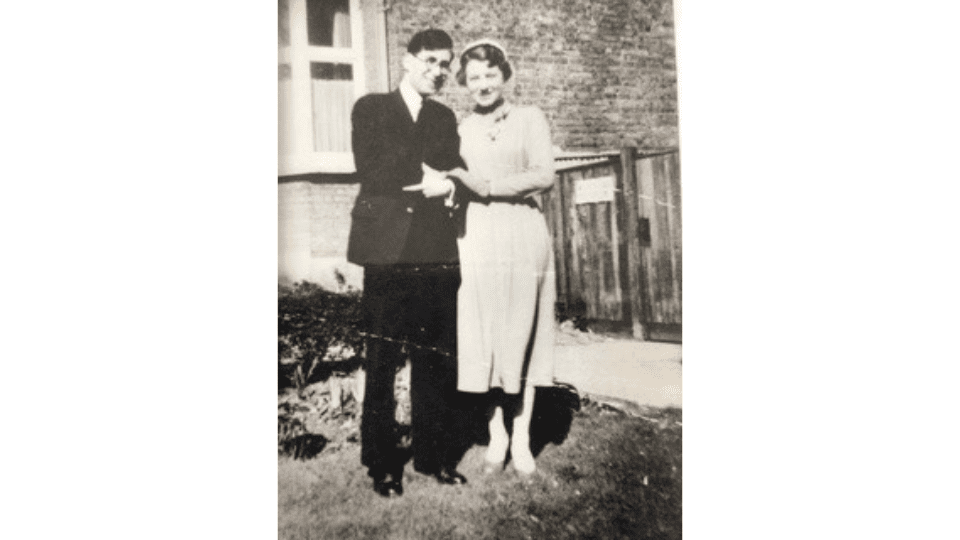
I hoped that in time, Mum and I could have some fun together as a thank you for all her hard work over the decades, but by 2018 she’d started to worry about her memory. I hadn’t noticed anything untoward; I thought at her age, coupled with her understandable grief, the occasional lapse in memory wasn’t too concerning.
My husband Andrew and I lived a few miles away from Mum in Devon, so I visited often and helped with anything that she couldn’t manage herself. She became worried about her ability to drive safely and gave up her much-treasured driving licence, but this made her increasingly socially isolated. For the first time, she lacked her usual fierce will to ‘just get on with stuff’.
Later that year, I did one of the toughest things I have ever done – I told Mum that Andrew and I had fallen in love with Shetland, far off the north coast of Scotland, and we had taken the big decision to move there. Andrew knew how I would worry about Mum, so at his suggestion we invited her to live with us in Shetland. We all moved there together in February 2020.
Mum became increasingly worried about the decline in her cognitive skills, and I agreed it was more than just memory lapses. She saw the GP for an initial assessment, following which she was referred for a brain scan.
In November 2021, Mum was diagnosed with Alzheimer’s disease at 83 years old. Although it was a lot to take in, having that formal diagnosis made the situation easier to deal with. As a family, we continued living as normally as possible, with the support of a dementia specialist nurse. He helped us navigate various issues as they arose, and provided us with links to organisations such as Dementia UK: essential for insight, advice and help.
In 2023, I decided to take on Dementia UK’s October Dog Walking Challenge, walking 100km throughout the month with my dog, Harley. Mum loved Harley; I would often find him in her lounge, leaning into her seat while she stroked his ears.
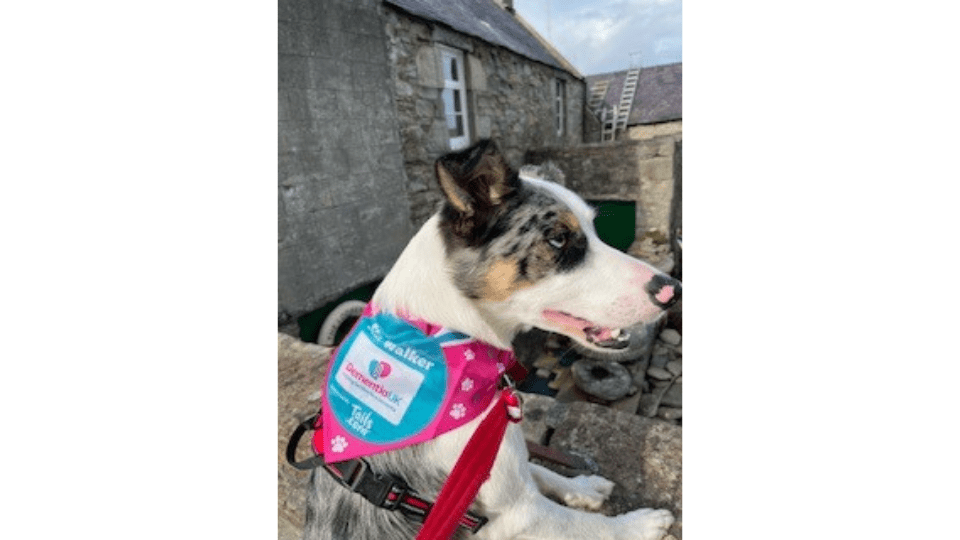
I enjoyed the challenge of pushing myself to walk more throughout October, while raising money for such a worthwhile and deeply personal cause. My walks gave me time to myself and room to breathe, and Mum was so proud of what I was doing. I loved walking alone with Harley, observing the landscape, but also sharing my walks with Andrew, and sometimes with Mum when she felt up to it.
One of my favourite moments during the challenge happened in a café in town. A stranger was admiring Harley’s Dementia UK dog bandana. When I explained what the fundraising challenge was, I had a £20 note pressed into my hand, along with a comment about what a cruel illness it is. Moments like this remind me that I am not alone.
An ongoing benefit of joining the October Dog Walking Challenge was the Facebook Group – I really enjoyed the online support that we gave each other. It also helped me through the next few difficult months, when my husband had a bad accident that meant I was caring for both him and Mum.
Mum enjoyed reading, but as her dementia progressed, she struggled to make sense of the books she loved so much. The saddest thing was stopping buying her newspaper, as she could no longer face reading it. She had always been very politically aware, so it was particularly hard to watch that interest waning.
Instead, Mum asked me to borrow books from the local library with ‘less characters and plots in them’, which helped. She also enjoyed watching The Crown, particularly the series set around the time she was a teenager, and then a young woman.
In January 2024, Mum had a fall and was admitted to hospital. I’m unsure if she had hidden an illness from us, but it soon became clear that she was very unwell.
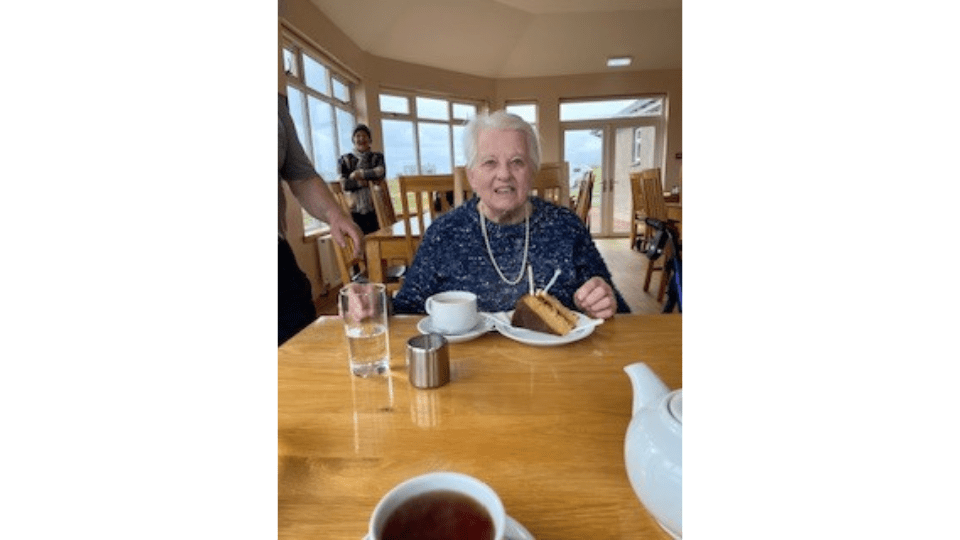
Thankfully, Mum had always been a practical woman. She had made her power of attorney and advance directive documents, which set out her wishes for her treatment and care, and kept them permanently lodged in her handbag. We had also had honest discussions about what she would and wouldn’t want; this meant I knew what her wishes were, and helped me with the emotional and practical strain of managing her end of life care.
Mum was moved onto a palliative care ward within the hospital, and I spent the next two weeks watching over her as she slipped into a coma. She died in February 2024 without regaining consciousness.
Mum was terrified of her dementia getting significantly worse, but she passed away before her fears were realised. That gave me comfort. I also feel a sense of peace that in her final days, Mum was comfortable and well cared for by the NHS, and I was able to spend so much time with her.
I’m so thankful for all the work Dementia UK puts into helping families deal with dementia, so in 2025, I decided to take on Dementia UK’s Walk 1K a Day in February Challenge. This helped me cope with my ongoing grief and the first anniversary of Mum’s death. Shetland can have the most beautiful days, even in the depths of winter, so the challenge helped me make the most of it.
My advice to anyone wanting to take on a virtual challenge for Dementia UK is not to be tough on yourself. Any money raised is a big help to the charity, but for me, the most rewarding part is talking with others – telling them about the dementia support that is out there, and letting people who are living with dementia and their families know that they are not alone.
Whether you have a question that needs an immediate answer or need emotional support when life feels overwhelming, these are the ways our dementia specialist Admiral Nurses can support you.

Read personal stories from people living with a diagnosis, their family members and friends - as well as our dementia specialist Admiral Nurses.
It can be helpful to think of dementia progressing in three stages - early, middle and late.