
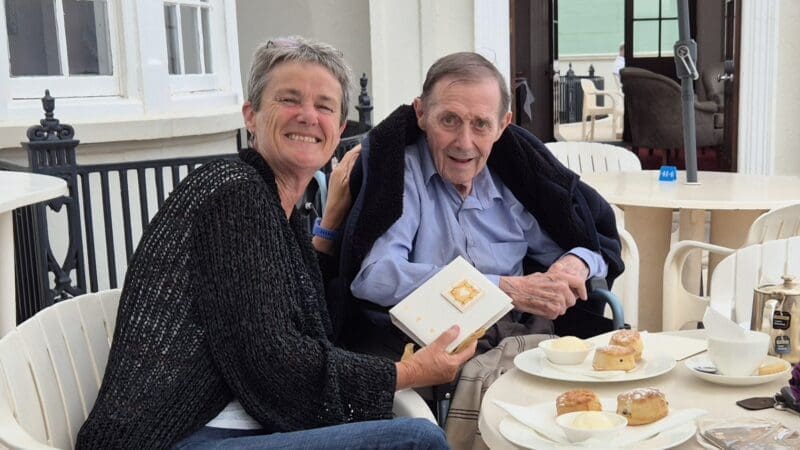
Jo’s story – “My whole world shrank”
Jo reflects on the support she has received from her Admiral Nurse, Liz, since her husband was diagnosed with dementia.
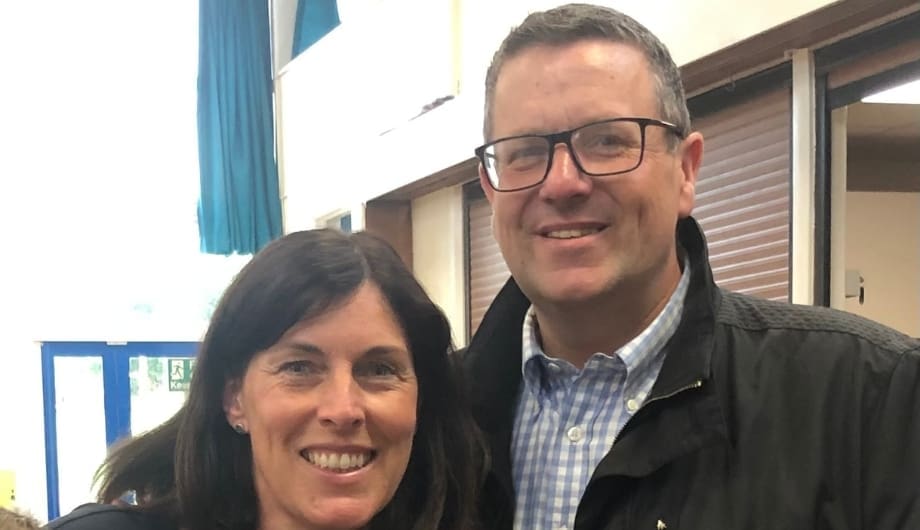
Sarah reflects on reaching crisis point when her husband, David, was diagnosed with young onset dementia and the support her family have since received from Dementia UK.
I met David when I was a student at Liverpool University when I was 21 years old. I volunteered at a local children’s charity where David worked, and it grew from there. After 10 years, we got married, and in 2019, we moved to Bristol to be near my family.
The period before we moved to Bristol was very stressful. Our son, who has autism and ADHD, had just started school, and we’d just adopted our baby daughter. David had also just lost both his parents, and his sister was really unwell.
Moving to Bristol was meant to be a fresh start, but I noticed little personality changes in David. He would repeat things and could be quite rude. Our daughter was only four at the time and David didn’t seem concerned when she was upset, like he usually would.
I found out that David was struggling at work; he had reduced his hours and didn’t tell me. I put everything down to stress, but with hindsight, I now know these were early signs of dementia.
Over time, David’s behaviour slowly became more aggressive. It got to the point where he was unrecognisable; it was like living with a stranger.
Money also became a massive issue. I found out that David had run up over £20,000 in debt. That was so out of character as he was a mortgage advisor. I started to notice lots of £10 transactions in our joint account, and I found out that he would spend his days buying scratchcards. Some shops had even banned him as he was scratching the cards before paying for them. He was also being targeted by scammers; he was so vulnerable.
David was diagnosed with stress and depression and prescribed anti-depressants, but I knew something more was going on. I started frantically Googling his symptoms and started to piece everything together. Both his mum and his sister had been diagnosed with dementia, so when I came across the description of frontotemporal dementia (FTD), I knew that was it.
I printed off all the info about FTD and took it to the GP, who agreed to send David for an MRI scan. It showed that he had dementia. He was formally diagnosed in 2022 with a genetic form of FTD. It was heartbreaking; he was only in his late 40s. It dawned on us that he was really ill, and it was going to get a lot worse, quickly.
Now I know more about FTD, I can see that David’s behaviour was textbook. And when we found out he had a genetic form of the condition, I was so relieved that both of our children were adopted.
After the diagnosis, we were just given some leaflets and left to get on with it. We were recommended to go to support groups, where I hoped I’d find my tribe, but David was so different from everyone else with young onset dementia. People would look at me like I’d walked into the wrong room. We weren’t even 50, and when I told people I had a four-year-old and an eight-year-old, they were flabbergasted. I was still working as a social worker; everyone else was almost retired. We were in our own category, and it was so isolating.
Trying to find support for the children was a nightmare, even with all my insight as a social worker. I found one book about dementia that wasn’t about Grandma and Grandad – but that was all.
Our children became young carers in a way; they became so hypervigilant and anxious. They couldn’t have anyone over to the house, we couldn’t go out for the day, we couldn’t go on holiday – they couldn’t live. We were in crisis.
When I came across the Dementia UK website, it was a saving grace. There was so much information on there, and reading people’s stories made me realise that it wasn’t just us going through this. I could even show the children some of the stories to help them feel less alone. It made a massive difference.
Even so, it was so hard to build up the courage to call the Dementia UK Helpline. I remember one day I was sitting on the floor, and I couldn’t stop crying. I was so ill, tired, and battling everybody. I was completely overwhelmed. I was also losing my husband. It was so scary – so I picked up the phone.
The dementia specialist Admiral Nurse on the Helpline was so understanding and kind. I felt safe opening up to her. My family has been an amazing support, but they didn’t understand my experience in the same way, and I held back a lot to avoid worrying them. But the Admiral Nurse understood exactly what I was talking about.
The nurse said I could ring back any time, which was very reassuring. We were also referred to Hannah Gardner, the Consultant Admiral Nurse for Children and Young people. My son, who is now 13, has autism and gets play therapy, which is amazing, but my eight-year-old daughter really needed some support. Initially, she was angry and kept asking, “Why my daddy?” She was scared that I would get dementia too, or that she would.
Now, though, our daughter has monthly video calls with Hannah which are so helpful. She can ask questions and get good, honest answers. Hannah is really great at easing her anxiety. She can talk about her dad now, whereas before, she didn’t like to talk about his dementia.
Christmas has changed so much since David’s diagnosis. I knew the Christmas before last was going to be our last one together as a family, so I got us all matching pyjamas and got the children a present from their dad so that they had something to keep from him. I bought a special angel to put on top of the tree to remind them of their dad each year. I took as many family photos as possible so the children could look back on them.
Last Christmas was really hard. David moved into a care home in September 2024, so it was our first Christmas without him. I was absolutely dreading it. I was trying to keep everything the same for them for the children – rushing around, getting presents, spending too much, overcompensating for the fact that their dad wouldn’t be there. The children kept asking if David could come home for the day, but I had to explain that it would be too confusing for him.
We went to visit David in the morning and gave him his presents then went to my sister’s, but it felt like I was acting all day. We all sat around the Christmas dinner table and all I kept thinking was, “Someone else should be here.” Outwardly, I looked perfectly okay, but I just wanted it to be over. I couldn’t wait for the Christmas decorations to come down.
We never expected to be in this situation at our age, and this Christmas will be tough again. But I know that we will have Hannah’s support, and that I can call the Helpline whenever I need to. It’s reassuring to know we’ll have that support as David’s dementia progresses – we’d be completely lost without it.
Note: David died in January 2026. The family have given permission to keep sharing their story and raising awareness about the impact of living with dementia.
Jo reflects on the support she has received from her Admiral Nurse, Liz, since her husband was diagnosed with dementia.
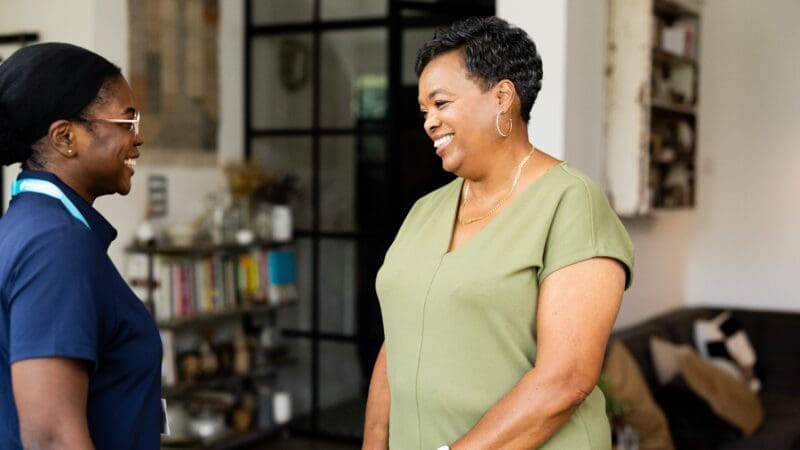
Admiral Nurse Safia speaks to Elene, whose mum lived with dementia. They reflect on the importance of culturally appropriate dementia care and support.
Help more families find the support they need when dementia changes everything.