

Ruth and Kip’s story – “I’ve never met Kerry, but she held my hand”
When Linda developed dementia, her husband Kip and daughter Ruth were supported by Kerry, our Consultant Admiral Nurse.
When someone develops dementia, it can affect their relationships with the people around them, such as their partner, family members and friends. On this page, our specialist Admiral Nurses explore how dementia might change a person’s relationships and roles, and how to cope with the impact.
Dementia can change the way a person thinks about themselves, as well as the way other people behave towards them.
Friends and family may be concerned that the person is vulnerable, and become over-protective. They might encourage the person with dementia to stop driving or working, or to give up their usual hobbies and activities – for example, if they are worried about them leaving the house alone.
The changes in the person’s abilities can also affect the roles of their family members. The person’s spouse might feel more like their carer than their partner. Or a child who cares for a parent with dementia may feel their roles have reversed.
This can lead to distress, arguments and resentment. The person with dementia may not feel that they need to be looked after, nor agree with the decisions that relatives make on their behalf. And their family member or friend may be frustrated if the person with dementia won’t accept help, and worried if they think they’re putting themselves at risk.
Many people with dementia develop changes in their mood and emotions. This may be due to their feelings around their diagnosis, or changes in the brain caused by dementia which can make emotional regulation more difficult. It may be harder for them to process their emotions and communicate how they are feeling to those around them.
It is very common for people living with dementia to experience depression, anxiety or apathy (lack of motivation towards things they once enjoyed). These changes in mood can impact their relationships with others. They may become more irritable, agitated or impatient, and withdraw from family and friends, making it harder to connect with them.
If possible, creating a safe space for the person to open up about how they’re feeling can help. If they are struggling to communicate how they feel, consider if their emotional changes are a sign of an unmet need such as pain, boredom or frustration. This can reassure the person that they are not alone, and you can explore tailored ways to help them cope with these changes in emotions and mood.
The cognitive changes related to dementia can have a big impact on a person’s roles and relationships. They might have problems with decision-making, problem-solving, reasoning and concentration. These issues can make everyday activities increasingly difficult, which could be frustrating for them and their partner and other family members.
The person might find it difficult to think logically, which could lead to disagreements. Or they might not understand that they need support and be resentful when family or friends try to help, especially if they were previously independent.
Some forms of dementia – particularly frontotemporal dementia – can also cause changes in the person’s personality and social behaviour, which can heighten tension and misunderstandings.
The communication challenges caused by dementia can be frustrating for the person with the diagnosis, as they might not be able to express themselves as they normally would. They may struggle to find the right words, jumble up their sentences, have difficulty following conversations or instructions, or revert back to their first language if English is their second language.
Communication challenges can also be difficult for family and friends and lead to misunderstandings.
It is important to stay calm and give the person time if they are struggling to communicate, especially if either of you becomes frustrated. Sometimes, using picture aids, writing things down or miming actions (eg pouring a cup of tea) can help with communication and understanding.
Read our tips for communicating with a person with dementia.
When a person has dementia, it is likely to have an impact on their roles and responsibilities. However, there is support available.
If the person with dementia works, their relationships with colleagues may be affected. For example, their colleagues may feel that the person is underperforming, is difficult to communicate with, or is behaving in ways that are inappropriate in the workplace.
For this reason, it’s a good idea for the person to tell their employer and/or colleagues about their diagnosis. This can help to reduce misunderstandings, and reasonable adjustments can be made to their role and/or working environment to help them continue to work.
At some point, the person with dementia may have to stop work. This could have an impact on their self-esteem and lead to a loss of independence. It could also create financial pressures which put a strain on relationships, especially if the person has commitments like a mortgage and dependent children. However, they may be able to claim certain benefits to help them.
Find out more about employment and dementia.
Caring for a person with dementia can be challenging, and it may affect your relationship with the person with dementia – for example, if you now feel more like their carer than their partner, or if the parent/child roles are reversed. To help manage this change:
Read our advice on looking after yourself as a carer.
Having a family member with dementia can be difficult for every member of the family and affect the way you all relate to each other.
When a child or teenager has a parent with young onset dementia (where symptoms develop before the age of 65), it can bring up many complicated feelings, especially if they are now taking on caring responsibilities rather than being cared for by their parent.
It’s important that the young person has someone to talk to, whether that’s another family member, a friend, teacher, a counsellor/therapist, or a support group for young carers. It’s also a good idea to inform their school/college about the situation so they can give support where needed.
Find out more about the support available for young carers.
Dementia can affect people’s sex life and the ways they are intimate with their partner. For example, the person with dementia may be more or less interested in being intimate than they used to be. There may also be issues around consenting to sexual activity, especially if the person’s mental capacity (their ability to make informed decisions) changes.
Being open with each other and seeking support from a professional, if needed, can help you and your partner to continue to have an intimate and/or sexual relationship, even if this looks different from how it was before.
Read our resources on sex and intimacy and find out how to get support.
Dementia can affect the way a person communicates, which can lead to frustration, misunderstandings and distress for them and their partner. However, there are ways to work around communication challenges – for example, by using non-verbal strategies like positive body language, gestures and spending time together on activities that are less reliant on verbal communication, like looking at photos or listening and moving to music.
Read more about how dementia affects communication and tips for tackling the challenges.
Read Rob, Amy and Chloe's story“It was hard coming to terms with the changes in the family dynamics. All the things Sarah and I had spoken about and dreamt about – settling down, retiring, going on holiday, watching the kids grow up – we lost all of that. I felt robbed of our future.”
While the dynamic between you and the person with dementia might change, you can still enjoy a close and meaningful relationship with these practical steps:
Children and young people may find it difficult to adjust to the changes in a loved one with dementia, especially if their parent is diagnosed. But with open communication and support, they can maintain a close relationship, even if in a different way from before.
Children and young people may struggle to cope if the person with dementia is less able to engage with them than before, for example if they are no longer able to help with homework, attend events like sports day and school plays, or just spend time with them at home.
Parents who are in a caring role – whether that’s for the other parent or a grandparent or other relative with dementia – may also have less time to spend with the young person.
If you have children or teenagers and are also caring for someone with dementia – known as being a ‘sandwich carer’ – it can be helpful to ask other family members or friends for support. They might be able to spend some time with the young person, or help with some of the caring duties to free up time for you to spend with your child.
While it can be difficult to have conversations about dementia with a child or young person, trying to conceal what is happening could lead to misunderstandings and make them more anxious, rather than less.
Being able to communicate openly about dementia can help young people understand the changes that are happening, so it’s important to give them opportunities to talk about how they feel. This will enable you to explain the situation and reassure them that they are still loved and valued.
Some steps include:
Explore our resources for supporting children and young people.
When someone has dementia, their loved ones often need to take on new roles and responsibilities. However, there is support available.
The person who is living with dementia may be entitled to certain financial benefits and support, which could ease some of the strain on them and their loved ones. Their carer can also request a carer’s assessment to identify measures that could help them in their caring role, which might include financial support.
Balancing work and caring can be particularly difficult. If you’re in this position, it’s a good idea to speak to your employer about the situation. They may be able to make adjustments to your role or working conditions, such as flexible working, that make it easier to combine your dual responsibilities.
The Admiral Nurses in our Dementia at Work Team have written a guide to working while caring for someone with dementia.
It can be very difficult when a loved one is diagnosed with dementia, and to see the changes in them as their condition progresses. You might be grieving the future you were expecting to have, feel guilty if you are struggling to cope with the changes in your role and relationship, or be worried about the impact on your finances or family dynamics.
It’s important to get support, whether that’s from a family member or friend, your GP, a counsellor or support groups for people in a similar situation.
Read more about coping with the emotional impact of a dementia diagnosis.
Caring for someone with dementia can be very difficult, especially as their condition progresses. For many, it becomes a 24/7 role.
While it’s natural to feel like it’s your duty to care for your loved one, there is nothing wrong with seeking professional support, whether that’s from a day centre for the person with dementia, a home carer or eventually, a care home. Having someone take over some of your caring duties can relieve some of the strain on your relationship with the person and free up time to spend enjoying each other’s company.
Read more about choosing a home carer or care home.
When someone develops dementia, it is important to have a conversation about their future. These discussions can be difficult but will ensure everyone understands the person’s wishes and agrees a way forward for when their condition progresses.
A lasting power of attorney (LPA) is a legal document that appoints someone to make decisions on the person’s behalf if they lose the mental capacity to do so themselves. There are two types: health and welfare and property and financial affairs.
It’s important to make an LPA as soon as possible after a diagnosis of dementia to avoid disagreements later on about who should make decisions on the person’s behalf. Read more about making an LPA.
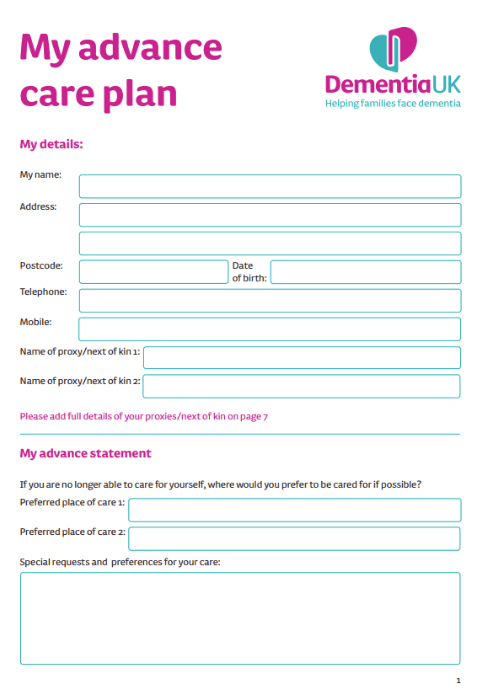
Advance care planning involves working with the person with dementia to make a plan for their future care and medical treatment. This can include long-term care considerations, for example whether the person would prefer to be cared for at home or in a residential setting.
Making an advance care plan will ensure that the person’s family and friends can respect their wishes as far as possible. Our guide to advance care planning and template below can be helpful when having these discussions
To speak to a dementia specialist Admiral Nurse about changing relationships and roles or any other aspect of dementia, please call our free Helpline on 0800 888 6678 (Monday-Friday 9am-9pm, Saturday and Sunday 9am-5pm) or email helpline@dementiauk.org. Alternatively, you can pre-book a phone or video appointment with an Admiral Nurse.
It is normal to feel differently about your partner after they develop dementia, especially as your relationship changes and you need to provide more care and support. It can be especially difficult if the person struggles to recognise you. It is important to acknowledge these feelings and seek support if you are struggling, for example from our Admiral Nurses.
It’s helpful to explain what dementia is and the changes the child may see in an age-appropriate way. This might include sharing books or videos. Our Consultant Admiral Nurse service for Children and Young People can also provide specialist support for under-18s who have a loved one with dementia – please call our Helpline if you would like to be put in contact.
See our resources on supporting young people and adolescents.
When Linda developed dementia, her husband Kip and daughter Ruth were supported by Kerry, our Consultant Admiral Nurse.

Cici (28) and Izzy (23) share their experiences of having a parent living with young onset dementia and becoming a carer at a young age.

Nat reflects on her experience of being a young carer and the support she received from the Nationwide dementia clinic.