
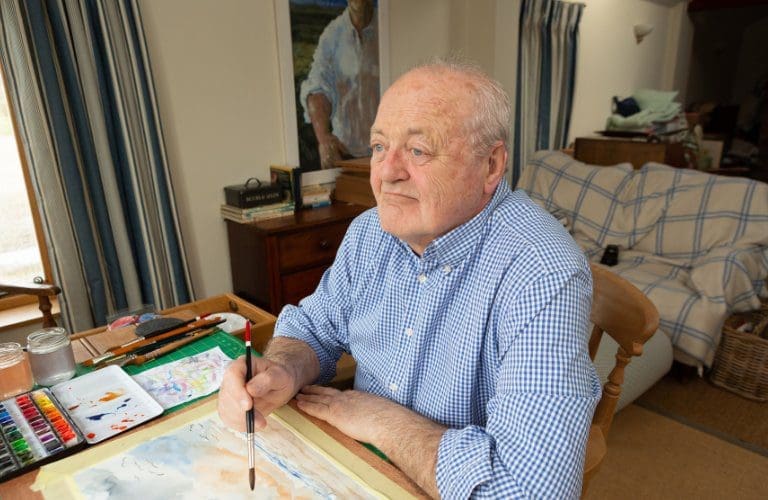
George’s story
George was diagnosed with mixed dementia in 2014 at the age of 62 and has spent much of the last eight years meeting people who live with the condition and campaigning for better support and services.
Statins are a type of medication prescribed to reduce cholesterol and prevent heart disease and related complications, such as heart attacks and strokes.
While some people are concerned that statins could cause dementia, research shows that for people with high cholesterol or heart disease, taking a prescribed statin may prevent damage to the brain and blood vessels and reduce the risk of dementia.
Our dementia specialist Admiral Nurses explain what statins are, what they are used for and how they might help to reduce the risk of dementia.
Cholesterol is a fatty substance that is made by the body and is also in some of the foods we eat. We all need cholesterol to keep our cells healthy, but too much of the wrong type can cause health problems.
There are two types of cholesterol:
On this page, when we use the term ‘high cholesterol’, we are referring to ‘bad’ LDL cholesterol.
Statins are a group of medications used to help lower cholesterol levels. They come as tablets to be taken once a day.
High levels of cholesterol can cause fat to build up in the arteries. This narrows the arteries, which can interrupt the blood supply to the body and brain and lead to health problems like heart disease and strokes. These fatty deposits can also break off and cause clots in the blood vessels. This can happen anywhere in the body, including the brain.
Statins work by blocking a specific enzyme which the liver uses to produce cholesterol, reducing the levels in the body. They can’t remove any existing fatty build-up in the arteries, but they can stop it getting worse.
Statins are prescribed to reduce cholesterol levels and help to prevent further damage to the arteries.
Statins may be prescribed for people who have high cholesterol or cardiovascular disease (CVD). They may also be prescribed for people who are at risk of developing CVD within the next 10 years. This risk is based on the person’s personal and family history.
CVD includes:
Research has shown that people who have high cholesterol between the ages of 40 and 60 are at an increased risk of developing dementia.
High cholesterol can lead to a build-up of proteins in the brain which form ‘plaques’ and ‘tangles’ that are linked to Alzheimer’s disease.
The blockages in arteries caused by high cholesterol levels can also lead to conditions like high blood pressure and stroke, which can increase the risk of vascular dementia.
People sometimes worry that taking statins could increase the risk of developing dementia. This could be because a small number of people develop some memory loss and confusion when they start taking statins, which they may attribute to dementia.
However, these symptoms are side effects of the medication and are reversed if the person stops taking statins, unlike the symptoms of dementia, which cannot be reversed and always get worse over time.
Studies have shown that people who are taking appropriately prescribed statins are around 20% less likely to develop all forms of dementia than those who aren’t taking statins.
However, taking statins where there is no reason to do so has no benefit on memory or thinking skills.
Studies have shown statins reduce the risk of Alzheimer’s disease by around 30% in people with high cholesterol, CVD or a high risk of CVD, compared to those who aren’t taking statins.
People who are taking appropriately prescribed statins are around 7% less likely to develop vascular dementia.
Research into the impact of statins on dementia is ongoing. There is evidence that if someone is taking statins for high cholesterol, taking them as prescribed on a long-term basis could help. However, taking statins is not thought to reduce the risk of dementia in people who have healthy cholesterol levels.
More research is needed into how statins could affect the chances of developing dementia.
There are a range of questions you can ask before starting to take statins, including:
To speak to a dementia specialist Admiral Nurse about statins or any other aspect of dementia, please call our free Dementia Helpline on 0800 888 6678 (Monday-Friday 9am-9pm, Saturday and Sunday 9am-5pm, every day except 25th December) or email helpline@dementiauk.org. Alternatively, you can pre-book a phone or video call with an Admiral Nurse.
George was diagnosed with mixed dementia in 2014 at the age of 62 and has spent much of the last eight years meeting people who live with the condition and campaigning for better support and services.
Paul's story shares the difficulties with mental health that many people experience after a loved one has been diagnosed with dementia.
Fred shares his experience caring for his wife Lynne, who had vascular dementia and passed away in 2023.
Memory problems are an uncommon side effect of taking statins. If you experience difficulties with your memory, you should consult the doctor who prescribed your medication. You may need a different dose or a different type of statin.
Most people who are prescribed statins will need to take them for life to prevent their cholesterol rising again. If you are concerned that statins are affecting your memory or causing other side effects, please speak to your doctor about your options rather than stopping taking them.