

12 Christmas tips for dementia carers
Our Admiral Nurses have put together a list of 12 Christmas tips so that you can enjoy the festivities whilst caring for someone with dementia.
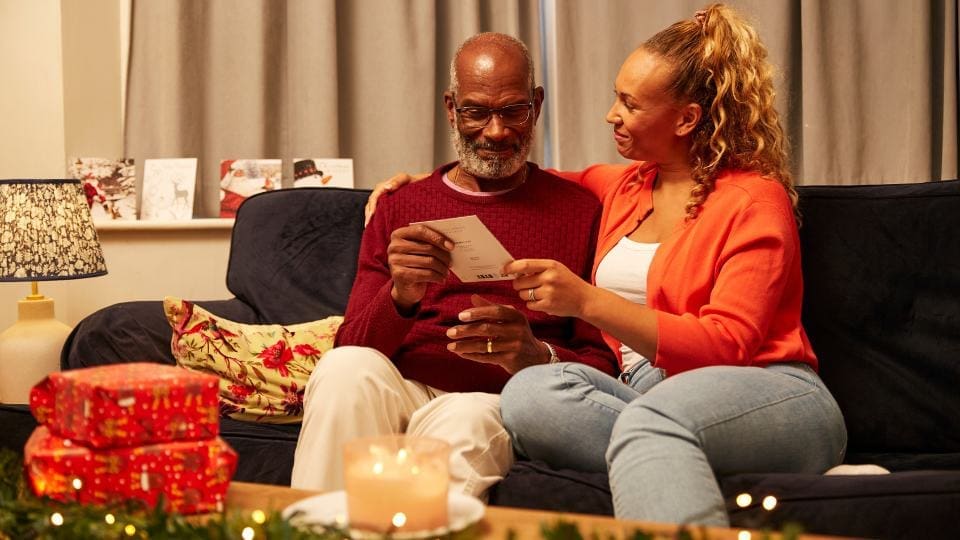
We share our ideas for dementia-inclusive Christmas presents
Knowing what to buy for a person with dementia at Christmas can be challenging, especially in the mid to late stages, but a thoughtfully chosen gift can bring joy and comfort.
Our list of Christmas gift ideas is grouped according to the different stages of dementia, focusing on presents that stimulate the mind or senses – and most importantly, have the person’s identity at heart.
In the early stages, the symptoms of dementia are often mild, so you may be able to give the person with dementia similar gifts to those they received before their diagnosis, with small changes to make them more accessible if necessary. If you are unsure whether they still enjoy or can engage with previous pastimes and passions, you could check with their main carer, another family member or a close friend.

If the person with dementia likes gardening, you could consider getting them a simple gardening kit (such as herbs that they could grow and use in meals) or low-maintenance garden or houseplants. Gardening tools that are designed with accessibility in mind, for example with adapted grips, could also make an excellent gift that will still be useful as the person’s symptoms progress.

If the person with dementia enjoys art, you could get them supplies such as watercolour paints, pencils and a sketchbook, or an adult colouring book. Tapping into a current or former hobby can be mentally stimulating and help maintain their sense of identity.
Gail, who lives with young onset Alzheimer's disease“Creating art, in whatever form that is, takes me to such a joyful place. I’m totally absorbed in what I’m doing, and for a brief time, my dementia seems to disappear.”
This is a framed digital screen that displays photos as a slideshow. Family and friends can get involved with choosing and sending photos to upload, and it can help start conversations and reinforce positive memories.
Accessible and assistive tech products make great gifts for someone with dementia.
Music is a powerful tool for evoking memories, and accessible radios/music players with simplified controls can allow the person with dementia to select their own radio stations or preloaded playlists independently.
Similarly, smart speakers can play music by voice command, as well as providing other useful services like giving updates on the weather and setting up medication reminders.
If the person enjoys reading, you could consider getting them an e-reader like a Kindle with accessibility features such as the ability to increase font size.
Board games, crosswords, sudoku, dominoes and card games are brilliant for keeping the mind active and providing opportunities to spend quality time together. You could tie these in with the person’s other hobbies: for example, you could get them a jigsaw with a picture of a favourite place they have visited.

Make sure you consider the difficulty level of any games and puzzles to avoid frustration. If you are unsure what might be suitable, ask a close family member or friend for advice, or look for companies that offer accessible games, such as puzzles with fewer pieces or simplified word games.
Personalised jewellery can help a person with dementia maintain their sense of identity and promote positive memories. Examples include:
In the middle stages of dementia, the signs and symptoms become more obvious and will have a bigger impact on the person’s daily life. At this point, it is beneficial to focus on gifts that will enhance their safety and independence and make it easier to continue their day-to-day routine.
Medical ID jewellery is personalised with the person’s name, details of their condition and contact information for their next of kin so that in an emergency, health professionals can see their needs. A range of styles is available, including necklaces, bracelets and wristbands.
Many people with dementia have difficulty understanding time. A dementia clock is a digital clock that shows the time, time of day (morning, afternoon, evening, night), day and date in large, easy to read digits. This could help reduce disorientation and may help prevent sundowning – an intense state of confusion that typically happens around dusk.
Reminder clocks are also useful for helping someone with dementia to remember important things like when they need to take medication.
Disturbed sleep is a common symptom of dementia, so night lights and motion-sensitive lights can help the person find their way around and reduce the risk of falls if they get up during the night.
In the late stages of dementia, the person’s abilities will be affected in many areas, including communication, mobility and independence. At this point, appropriately chosen gifts can promote wellbeing, reminiscence and close relationships with family and friends.
These are usually made from different colours and textures of wool with various items attached, such as bobbles and buttons. The person with dementia can sit with their hands inside the muff and fiddle with the attached objects.
Twiddle muffs and fidget blankets can help reduce boredom, stress and agitation, provide sensory stimulation and give the person something to focus on. They are easy to make, and you can find patterns online.
If you can’t knit, twiddle muffs can be bought from companies that sell dementia-inclusive products, or some dementia groups and memory clinics have volunteers who knit them. A simple soft blanket to go over the person’s lap may also be comforting.
Download the NHS twiddlemuff knitting pattern
The use of scents can promote reminiscence and positive emotions in a person with dementia, especially when communication and understanding are affected.
A ‘reminiscents’ box can be homemade and filled with scents that are meaningful to the person – for example, their favourite aftershave or perfume; lavender if they liked gardening; or spices or cocoa if they enjoyed cooking. You can change the contents occasionally to keep it interesting.
This is the perfect gift to evoke memories and help the person connect with family and friends, and children can get involved too, helping to fill the box and guess the scents with their relative.
A life story is a record of a person’s life that can trigger happy memories, create talking points and help carers get to know them as an individual. Ideally, they are developed with the person’s involvement, but if they are unable to help, you can create it for them.
You can choose the format – or combination of formats – that works best for the person: books, collages, video or voice recordings, memory boxes or apps.
Everyone’s life story is individual, but you could include:
For further guidance, visit our page on creating a life story for a person with dementia.
A weighted blanket could be a comforting gift for someone with dementia. They use gentle pressure therapy to create a sense of being held or protected and could reduce stress and anxiety and improve sleep.
Be aware that some people find weighted blankets restrictive, especially if they are frail, so avoid choosing anything too heavy. Around 10% of the person’s body weight is ideal.
Lifelike dolls or soft toy animals can have great benefits for some people with dementia, particularly in the later stages. They can promote feelings of relaxation and pleasure, give the person something to ‘care for’, and are considered a form of therapy – not merely playing with a toy.

Whatever the person’s stage of dementia, the best gift you can give is quality time together. You could consider taking them to a special place, such as a park that they love, a zoo or the cinema or theatre (some have screenings especially for people with dementia and other disabilities).
You don’t need to arrange the day out or visit over the Christmas period, when people and places are busy and the person needs routine more than ever. Instead, you could pledge your time with handmade IOU coupons for different days out or activities to do together in the coming weeks or months.
If you are a family member or friend, spending some time with the person can also provide respite for their main carer.
If the person with dementia finds it difficult to go out, simply taking an hour out to spend with them at home, look at photos, listen to music, or just sit in the garden can provide a special opportunity to connect and enjoy each other’s company.
Choose gifts that offer comfort, connection and autonomy, for example a soft blanket, cosy socks, a shawl, aromatherapy products with mild scents (such as lavender or chamomile), sensory items like fiddle muffs or fidget toys.
Choose meaningful reminiscence gifts like photobooks with large prints and captions or memory boxes with simple items that link to pleasant memories (trinkets, photos, scents).
Make sure gifts are simple to use, such as clothing with easy fastenings, simplified technology like clocks or phones with large buttons, or large-print books.
Consider the person’s safety, for example by giving them unbreakable items.
Look for activity-based gifts that suit the person’s abilities, like large-piece puzzles, easy arts and crafts sets or simple, lightweight gardening tools.
Think about gifts that help maintain the person’s identity, such as their favourite perfume or aftershave, a personalised music playlist or books that tap into their interests, for example biographies, sporting memories, poetry or photographic books.
Give gifts that make daily life easier, for example a nightlight, dementia clock, assistive technology, memory aids, a simple diary or calendar.
Open gifts slowly, one at a time. Talk about the giver and explain what the item is, if necessary. Allow pauses if the person becomes overwhelmed.
Give gifts that could overwhelm or confuse the person with dementia, such as devices that need passwords, items that require fine motor skills (for example sewing kits) or complex board games. These can cause frustration and be abandoned quickly if they are difficult to use.
Give gifts with strong smells, flashing lights or loud sounds; these could trigger anxiety, sensory overload and disorientation.
Give gifts that are fragile or hazardous, such as glass ornaments that could break easily, sharp tools or small trinkets that could be swallowed.
Buy too many presents: this could overwhelm the person.
Give gifts that are sentimental or emotionally triggering. Memories can sometimes be unpredictable, so a well-meant present like a photo of a loved one who has died could cause distress – but be guided by your knowledge of the person.
For further advice on supporting a person with dementia around Christmastime or any other aspect of dementia, please contact our free Helpline on 0800 888 6678, email helpline@dementiauk.org or book a virtual appointment.
Our Admiral Nurses have put together a list of 12 Christmas tips so that you can enjoy the festivities whilst caring for someone with dementia.

Christmas activity ideas for a person with dementia for a fun and engaging time for all the family
We share answers to some common questions that our dementia specialist Admiral Nurses hear on Dementia UK’s Helpline over Christmas and the New Year – and that might help you over the weeks ahead.