
Caring from a distance
Caring from a distance is when you support and help someone from afar, and it affects many.
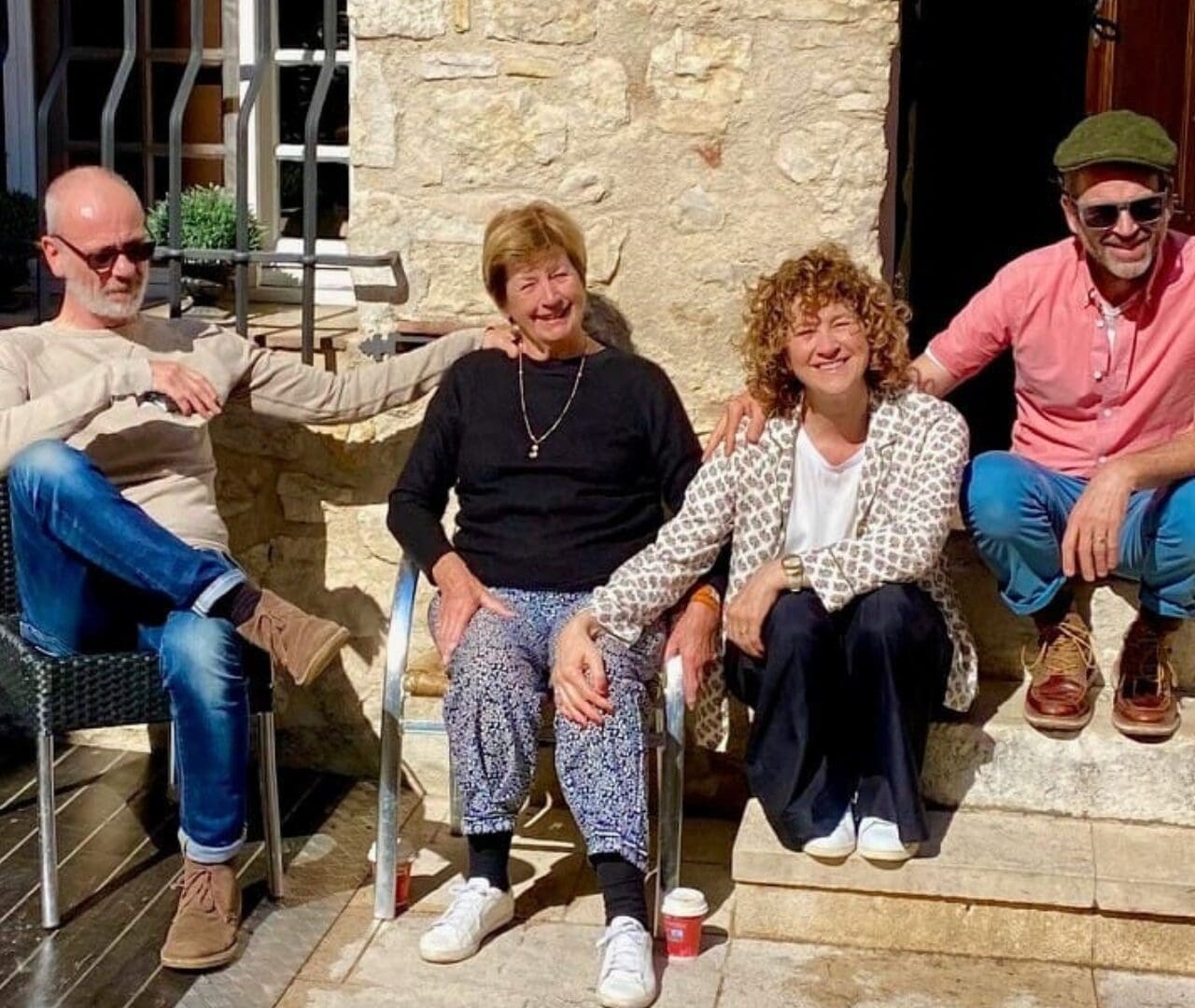
Bec reflects on the challenges she faced when caring for her Mum from a distance.
I had a complicated relationship with my mum, Sheena. She left the family home when I was nine years old, remarried and moved to Belgium. I didn’t see her for a year or so after she left, and I missed her very much. My brothers and I were brought up by my dad. The pain of separation was unbearable and as a young adult, I would visit Mum as often as I could.
When I had my own children, I felt such an intense love for them that I struggled to understand how Mum could have left us. We had many honest conversations over the following years, and I now know that she had a huge amount of regret for leaving. She had a very difficult childhood and struggled to express her feelings, but she was actually incredibly loving.
Mum had a special relationship with my boys; they adored her. It was almost a second chance for her, and I loved seeing them all together.
Mum’s dementia symptoms began when she was around 78 years old and were subtle at the start. She would forget how to do really simple things like taking a lid off a yoghurt pot. She used to love cooking but suddenly said she couldn’t be bothered anymore. I once watched her use a whole block of butter to fry an egg.
I knew something wasn’t right and suspected Mum might be in the early stages of dementia, but getting her assessed was very difficult. By this time, she had moved to France and her husband was initially reluctant to seek advice. Mum’s GP was also very dismissive and nonchalant. The French healthcare system didn’t seem to approach dementia in the same way that we do in the UK.
Mum eventually got diagnosed with dementia at the age of 83, just a year before she died. Even after she was diagnosed, I had to try very hard to get her the best possible care. I didn’t know how Mum’s care was being managed and had so many questions and concerns. She lived in a remote village in the south of France and the language barrier and cultural differences proved very taxing.
I turned online to look for support and came across the Dementia UK website. I found it really clear and helpful, so I decided to call the Helpline and was referred to dementia specialist Admiral Nurse Kerry.
After each visit to Mum in France, I would schedule a call with Kerry. These long calls became my absolute lifeline. Her knowledge and expertise were exemplary, and she explained everything to me in a very clear, patient way. Nothing was off limits, and she went out of her way to help and comfort me – sometimes with phone calls at 7.30am! I honestly don’t know how I would’ve coped without her.
Following a fall, Mum ended up in hospital with a broken femur and developed severe delirium. It sent her spinning out of control. She would hallucinate and talk in a made-up language. Kerry explained all the reasons why Mum may have developed delirium, from staying in hospital to going under general anaesthetic, which helped us make sense of the situation.
Kerry supported me with practical things like helping me understand what all Mum’s medications were for. It was hard caring from a distance, but Kerry helped me to focus on what I could do from home to support Mum. She suggested that I FaceTime her every day and play music to her. This really helped, and Mum and I would sing and be silly together.
Kerry’s understanding knew no limits when it came to emotional support. It was like talking to a therapist; she really understood what I was going through. Kerry was my go-to and she always made time for me. She was absolutely exceptional. I can’t sing her praises enough, she was invaluable and a guardian angel.
Towards the end of her life, Mum became bedbound. She had no interest in television or books. Sometimes she would cry, which was really upsetting. Kerry explained that this was quite typical behaviour for someone living with dementia, which was incredibly reassuring. There were also times when Mum’s face would light up with the most amazing smile when she saw me. You could literally see the love in her eyes.
Dementia has taught me that so much communication is non-verbal. I could look at Mum’s face and understand how she was feeling without her saying anything. Dementia made connecting with each other so simple and straightforward. I realised I was able to completely forgive her and love her unconditionally which was very healing and meant a lot to me.
A few weeks before Mum died, her nutritional intake severely fluctuated and she started to refuse food and drink. She had already been on IV fluids for a number of months, which were basically keeping her alive. She also had a huge bed sore and was on a significant amount of pain relief which was compromising her ability to stay awake.
We made an emergency trip to France, having only been there the week before, as we knew this might be the end. Mum hadn’t opened her eyes for two days but as soon as we arrived, she fixated on us, and I could see she was fighting to take us in. I told her it was okay to go, and she died two minutes later. After all that pain, she had such a peaceful end to her life. I felt so grateful that she waited for us and opened her eyes to see us all one last time.
As soon as I could, I called Kerry to tell her what had happened. I got the chance to tell her just how much her support meant to me.
Everyone needs to know about Dementia UK and Admiral Nurses. I hadn’t heard of them until I started looking on Google for dementia support. More people need to know that you can call and speak to someone who understands what you’re going through. I couldn’t have got through our dementia journey without Kerry.
***
We understand that caring for someone from a distance comes with its own set of challenges. Our Admiral Nurses are here to guide you through these. We are happy to support families who live in a different country from the person with dementia, but please be aware that if the person lives outside the UK, we may not be able to fully answer your questions due to differences in how health and care services are structured overseas. However, we will do our best to provide you with the support you need with caring from a distance, such as advice on managing symptoms and changes in behaviour, and emotional support for you.
Please be aware that we are unable to return international calls, and call charges from abroad will vary.
Monday-Friday, 9am-9pm.
Saturday, Sunday and bank holidays (except 25th December), 9am-5pm.
Call: 0800 888 6678
Email: helpline@dementiauk.org
Alternatively, you can book a phone or video appointment with an Admiral Nurse at a time and date that is convenient for you at dementiauk.org/book
You may also find the following leaflet useful: Caring for someone with dementia from a distance.
Caring from a distance is when you support and help someone from afar, and it affects many.
Sharing your story with Dementia UK can help to inspire and reassure others who may be going through similar things.
Help us raise vital funds, improve care and support for families facing dementia and spread the word about our specialist dementia nurses.