
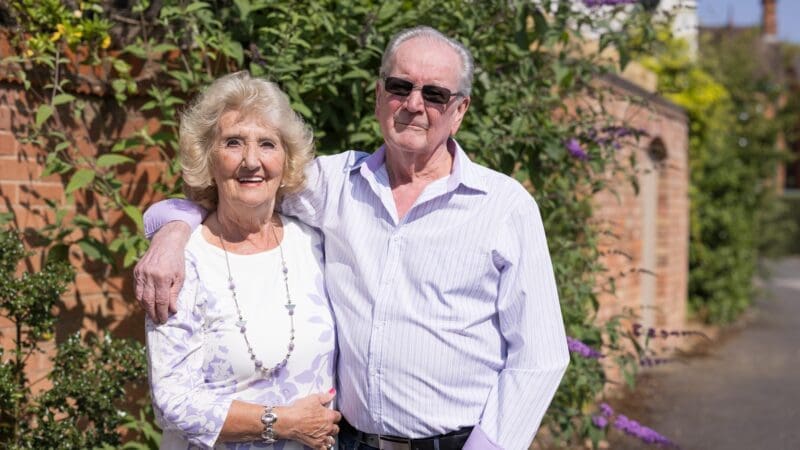
Sylvia and George’s story – “Having open conversations helped us to cope”
Sylvia and George share the importance of having open conversations in order to cope with Sylvia's diagnosis of Alzheimer's disease.
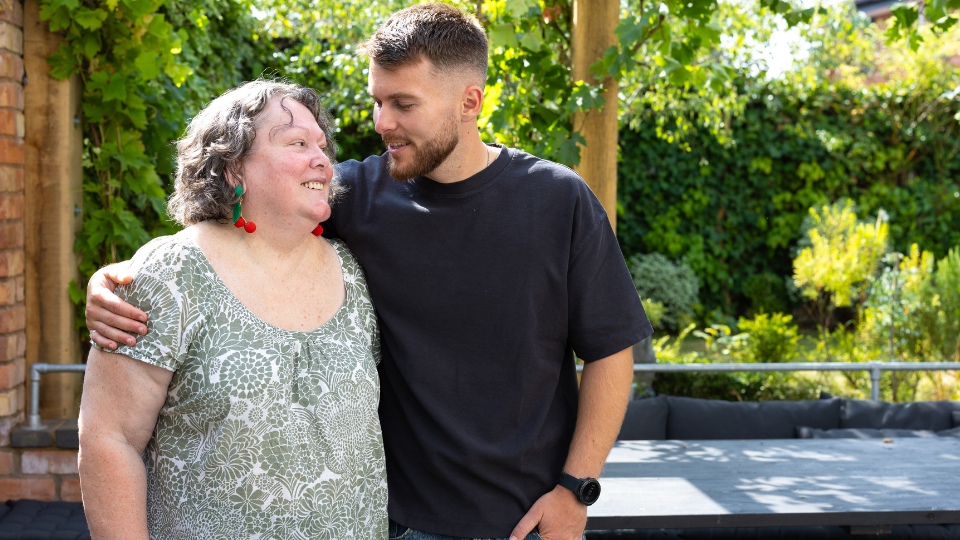
Ronnie and her son, Will, reflect on how her diagnosis of young onset Alzheimer’s disease has impacted their lives.
Ronnie: Having children is the best thing I’ve ever done. I became a lioness and would do anything to protect them. My children are my oxygen, my sunshine. They keep me going. I think dementia has made our family a lot closer.
There were a few early signs that I noticed before my diagnosis. I suddenly couldn’t use the microwave or the oven. I used to drive all over the country without a satnav, but I began to get lost in familiar places. I started to get very tired in the afternoon so I’d have to start work at 6am, as I couldn’t function after lunchtime. I’d chair meetings and couldn’t work out how to use Microsoft Teams.
I had many trips to the GP, but they kept saying I had depression. After three years, in 2016 I was eventually diagnosed with young onset Alzheimer’s disease at the age of 49. After I got the diagnosis, I went back to my office and locked the door. I sat in my swivel chair, spinning round and round, crying my eyes out. I had to go home and act like everything was okay.
I didn’t tell the children about my diagnosis for three years. As a family, we’ve always been so open and looking back, having their support would have been so good. But they were young teenagers, and I felt like it was selfish to tell them. I wanted them to be out having fun and living – not thinking about ifs, buts or maybes. It was very lonely.
Will: For years, Mum was going through the process of getting a diagnosis and I don’t remember her ever seeming worried. She did it alone. I don’t remember when or where she told me; I just remember having lots of questions. I turned to Google to find out more about young onset dementia, but that left me even more confused. I quickly learnt there was no cure for dementia and wanted to know how long we had left together.
I was only 16 years old when I found out about Mum’s dementia diagnosis. I’d just moved away from home and started a small business soon after I found out about Mum’s diagnosis. I struggled to think about her dementia because it would pull the rug from me every time.
Ronnie: I found out about Dementia UK’s Helpline online and waited until all the family were out of the house so I could call. The conversation I had with the dementia specialist Admiral Nurse gave me a glimmer of hope. They reassured me that dementia wasn’t the end of the world; I could still live a meaningful life and see more of my family growing up.
The call was a turning point and breath of fresh air. Every other conversation I’d had with doctors and nurses had been negative. They only gave me two years to live and said that I would end up in a care home. But there was no mention of the stages in between. That was eight years ago.
Will: I don’t know where Mum would be without that phone call to the Helpline. She has lived so much life since. Mum has influenced policy and changed the way the healthcare system treats people living with dementia. She inspires me every day and is doing what she can to fight for future generations.
My sister and I now know that the Helpline also exists for people like us. A dementia diagnosis means you have to change your life, and knowing that support is there when we need it is reassuring.
Will: I started taking part in fundraising challenges to raise money for Dementia UK and spark conversation around dementia. I found that ultra-endurance challenges helped me to accept Mum’s diagnosis. When I’m 18 hours into a challenge, in the middle of nowhere, that’s where I learnt to dance with dementia and think more about it.
When I’m at my lowest, I call Mum. It’s an immediate reminder why I’m doing the challenges. I think subconsciously I’m frantically trying to swim upstream and stop dementia taking Mum, which I know I can’t. But Mum says that while she doesn’t always remember events, she always remembers feelings. I want to intensify those feelings for her. I want to make her proud.
The hero in this story is my sister, Lizzie, who cares for Mum. I feel tremendous guilt every day that Lizzie does so much, yet society sees carers as invisible and treats them so poorly. I take part in challenges to make people like Lizzie more visible and to use my voice to make even a small difference.
Ronnie: I’m living my best life, making memories and not saying no to anything. I’m loud and proud about my dementia diagnosis and I’m passionate about making a difference to other people living with it. I talk to everyone about dementia, even taxi drivers! It starts conversations and breaks down myths because a lot of people think dementia is just about memory loss.
Every night I go to bed, I worry that I won’t be myself the next day. But I thank God the next morning that I’m still me. I pray there’s a lot more of me to come.
Whether you have a question that needs an immediate answer or need emotional support when life feels overwhelming, these are the ways our dementia specialist Admiral Nurses can support you.
Sylvia and George share the importance of having open conversations in order to cope with Sylvia's diagnosis of Alzheimer's disease.
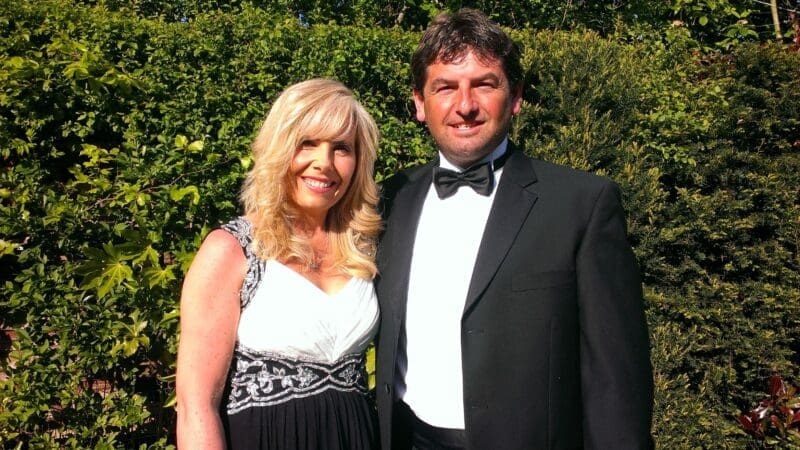
Neil shares his experience of attending a Nationwide clinic with his wife, Marie, who is living with young onset dementia.
Sylvia and George share the importance of having open conversations in order to cope with Sylvia's diagnosis of Alzheimer's disease.